
In college, a woman from my Art History class handed me a tiny Bible made from two fun-size Hershey’s, tin foil and some felt.
“Happy Reformation Day!” she said as she thrust the minuscule package into my hand. My mind shot back to freshman year world history when I learned that October 31st was a real church holiday. October 31, 1517 is known as the day Martin Luther nailed the 95 Theses to the door of the church in Wittenberg, and that rainy 8am lecture was the first time I had witnessed someone actually celebrating the day we commemorate the start of the Protestant Reformation.
I will say that Luther’s protest against the Catholic church’s sale of indulgences (slips of paper guaranteeing an already-passed loved one’s entrance into Heaven) has always been one of my favorite moments in church history, and I can’t help but think that celebrating such an act as incredibly relevant to today’s social, political, and even religious environment. While we don’t have clergymen in the streets selling the remission of sins in order to fund a new basilica, the reality is that we do have insidious ideologies floating around, ready to deceive the majority of Christians whose discernment muscle is honestly pretty atrophied. The coming election has made that fact more obvious to me, anyway, and in the age of moral relativism we need our Luthers—our discerning men and women who are willing to walk in the Spirit and stand for truth.
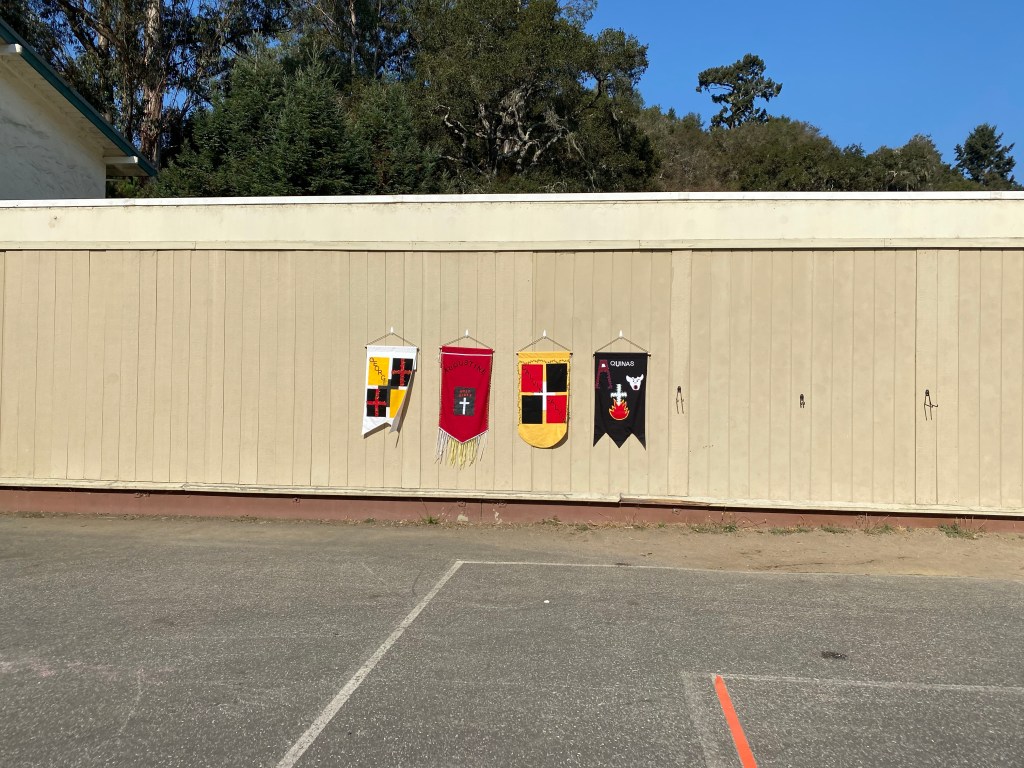
At my school, Reformation Day is a school-wide festival and, as I’ve described it to friends who are confused as to why I’m wearing a velvet bodice to work, it’s basically the Christian Ren Faire.

Kids are sorted in houses (at first I thought it was very HP, but it turns out that this is normal with Classical Schools) and compete in games for house points. Foxtail, dodgeball, and some soccer-related game are Reformation Day mainstays, but my favorite part is the costume parade.
Last year’s costume contest had me wondering if I had wandered into an episode of Parks and Rec. Since the school is small, the morning assembly allows time for every child to take the stage and announce their costume, which can come from any of the following categories: Royalty (King/Queen/prince/princess, but not Disney); townsperson/peasant; animal; inanimate object (kid you not, last year one kid was a sword); Bible character; and person from church history.
Last year there were mostly knights and princesses, but a good number of Bible characters and church martyrs were thrown into the mix, too. One second grade Paul mounted the stage with dignity as he held his scroll and tried to keep his little beard from falling off while a dragon, aka a kid in one of those inflatable T-Rex suits stumbled up the steps, his taped-on cardboard wings flapping in the ascent. There were at least three Moseses (all under the age of ten), one St. Teresa of Avila, and one very detailed St. Sebastian, who was famously tied to a tree and shot through with arrows. Not only did this high school boy have bloody arrows sticking out of his shirt, but he also tied a huge tree branch to his back, giving the full appearance of the early Christian martyr.
My favorite of all, however, was a tiny second grade girl with a tent peg and mallet in hand. I nearly fell out of my seat when she took the mic and announced deadpan in the tiniest voice, “I’m Jael.”

This year’s Reformation day was obviously different thanks to COVID, and we ate Costco pizza instead of the usual Oktoberfest-esque feast of sausages. Still, there was lots of laughter, friendly house-against-house competition, a refresher in church history, and plenty of pie. The change in pace was so refreshing, especially for the younger students whose daily routines are scheduled down to the second to allow for minimal contact with students outside their class. Seeing my high school kids pummel their opponents in dodgeball was almost as great as watching one kindergarten knight wander onto the dodgeball court unawares, pull out his sword and shield, and hunker down against the enemy (not the opposing team, but every ball that came his way), fighting with bravery and conviction until the end of the round.

All in all, it was a good reminder that sometimes, the kind of reform we need is found in fewer rules and some room to run around. I liken it to the paradox of sanctification—that process of falling backwards into the arms of Christ as he unmakes the old us and fashions us into something new. We really do get that process wrong when we try to white-knuckle our way into holiness and forget that it’s God who softens hearts and sets us free from our old ways. Jesus explained this to his bickering, power-happy disciples when he said, “Truly, I say to you, whoever does not receive the kingdom of God like a child shall not enter it” (Mark 10:13-16). In His upside down Kingdom, it’s the humble that are put first, and the Lord of the Universe is laid in a manger. One of my favorite verses, Psalm 8:2 explains how it’s the praises of babies that can win a war:
“Through the praise of children and infants you have established a stronghold against your enemies, to silence the foe and the avenger.”
If Jesus expects me to be like a child, then I want to be that five year old knight who wanders into a legitimately dangerous arena and fights, sword in hand, with all joy and conviction and no fear.

 Kayley Chartier