Jesus of my grief

I am a mother without a mother.

That’s something I’ve known since we found out about our baby in October, but it’s a thought that creeps in more and more frequently now that my hospital bag is packed and the car seat has been installed for over a month.

I fully expected to feel the cold fog of grief on Mother’s Day. I knew smiling on birthdays and important milestones would perhaps feel forced this year. However, nothing could have prepared me for the crisis of faith on a normal Tuesday. No one could have told me how tragic and seemingly random it would all feel. No one told me how heavy and truly cruel it could feel to carry grief. 

It manifests as stifled cries and exhaustion. Grief can be hidden to the eye with a quick smile, but it’s a sandbag you can never quite set down.

And yet, the scriptures are full of these weird examples of the universe’s inventor kneeling in the dust with those who are weighed down in grief. Psalm 56:8, for example: 

“You keep track of all my sorrows. You have collected all my tears in your bottle. You have recorded each one in your book” (Psalm 56:8).

There are times I’m tempted to believe that God simply does not care anymore. If he did, why would He allow me to lose three family members within the span of six months? Why would he stand by through one of the most painful relational fallouts I’ve ever experienced? Why did I have to lose my mother right before I became one?

I don’t get all the answers to my ‘whys’ this side of eternity—but I do get assurance of His closeness in the darkness. 

We are reminded that in the end, the Lord will wipe our tears away (Revelation 21:4). To collect tears, and to wipe them, you have to get pretty close. Both actions require the Comforter to touch the face of the broken. 

And if you’re in grief right now, let me assure you that Jesus’ hand is touching your face. He is collecting your tears. He has recorded your sorrows. 

I pray that even in grief, you will sense His nearness. I pray that in the bleakness you will seek Christ in the dark. 

The Jesus who held out his hands out on the cross can still hold you now. 

The one who wipes away sin and death will personally wipe your tears from your face. 

Evergreen

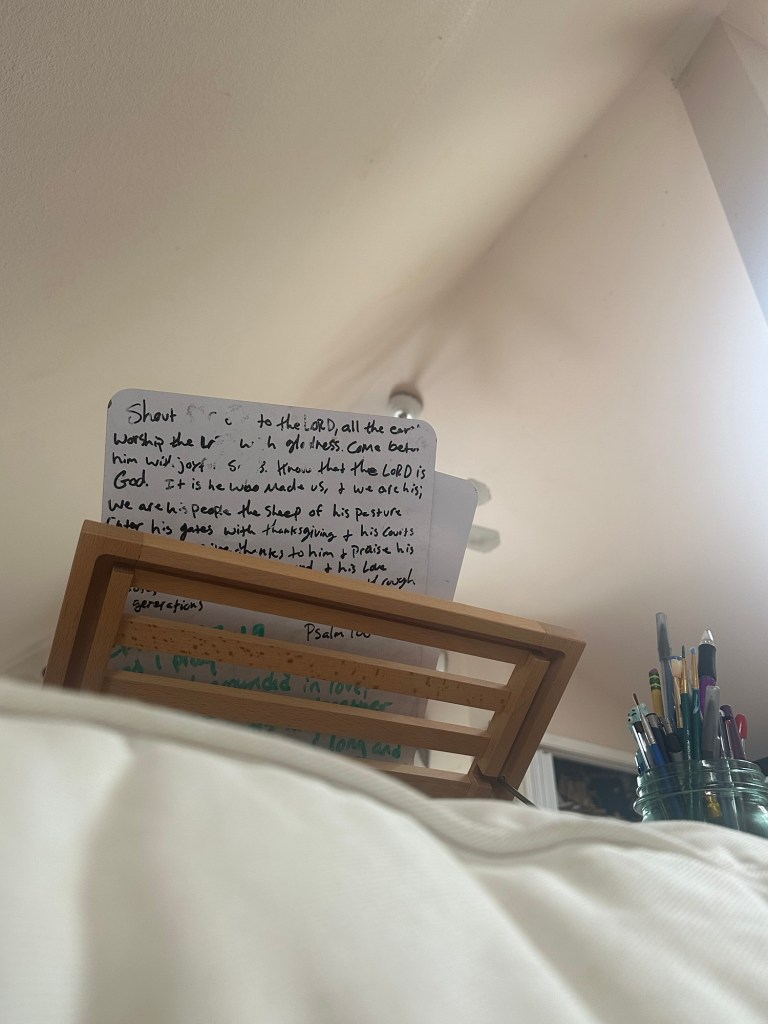
I had put myself in an awkward position. No—literally. Forced to recline at an odd angle because our loveseat’s a bit too small for both me and Calvin to stretch out, my view was the back of a whiteboard Calvin uses for studying. One side listed several meds he needed to memorize for school; the other side was a verse.

I had just come home late again, tired physically, but mostly emotionally. I had prayed out loud on the way home (something I do a lot), talking to Jesus about His plans and purposes for my life, telling Him how thankful I am to be a sheep in the pasture of a Good Shepherd.

Now I was squished on the cramped couch, staring up at the verse on the back of whiteboard: 

“Know that the Lord is God. It is he who made us and we are his; we are his people, the sheep of his pasture.” (Psalm 100:3).

There’s no way I would have seen the verse had I not been so exhausted I had to lie on the couch. There’s also no way I would have seen it had I not been in an uncomfortable position. 

Friend, this is the goodness of God. Not that my situation always changes or that I get exactly what I’m praying for the moment I ask, but that I get Jesus for my situation—the presence and the peace and friendship of the One who knows and loves me. I don’t chalk up things like reading the very verse from which my prayers were born to coincidence. Doing so would be like saying my husband bringing home my favorite flowers on my birthday is a coincidence. 

The more I walk and talk and just sit with him, the more I learn that Jesus is personal, and that relationship with Him is not solely a life of sacrifice and suffering. There most definitely is sacrifice and suffering involved—required, even—but there is also sweetness. There is also beauty. There is also the fullness of joy. Even if my situation doesn’t change and the rain doesn’t come in a year of drought, I still get all of Jesus to sustain me. 

“But blessed is the one who trusts in the Lord, whose confidence is in him. 

They will be like a tree planted by the water

that sends out its roots by the stream.

It does not fear when heat comes;

its leaves are always green.

It has no worries in a year of drought

and never fails to bear fruit.” (Jeremiah 17:8).

No crying He makes?

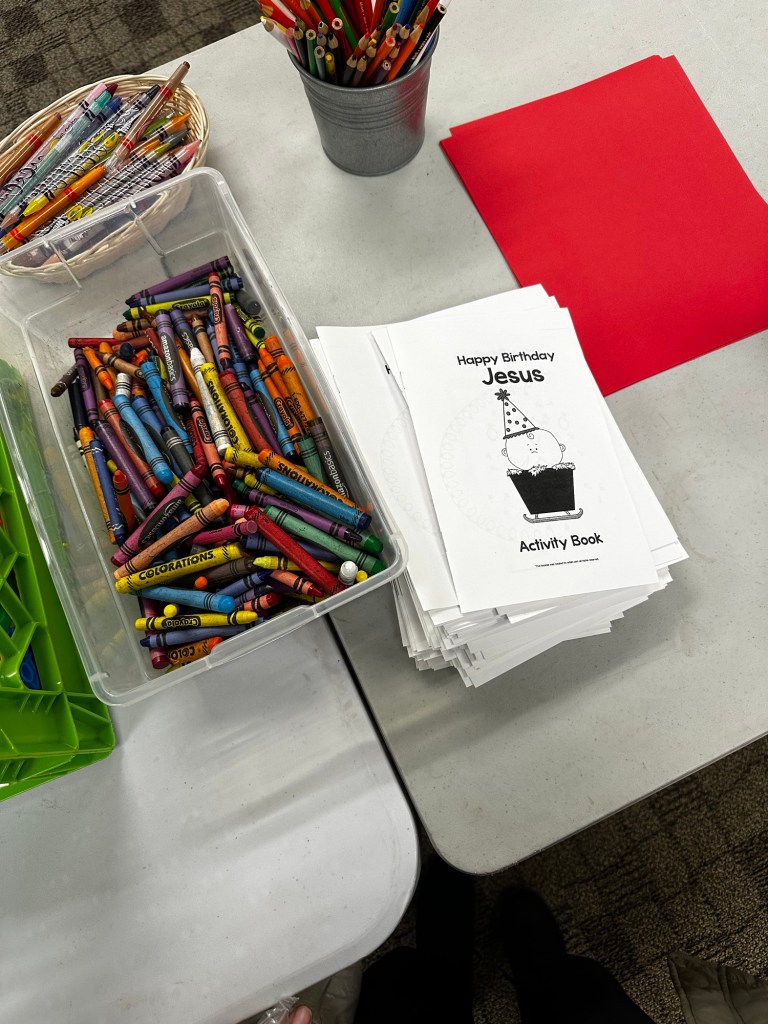
The littlest shepherd in the front row tilted his head as his pillowcase head covering fell over his eyes…again. Angels in garland halos sang while a 5 year-old Mary carefully rocked the Jesus doll. It was a chaotic, adorable scene, and the congregation was delighted. 

I sat on the floor in the front row, trying to help the kids with their cues. When the song “Away in a Manger” came on, however, a familiar line removed me from the moment:

“The little Lord Jesus, no crying he makes.”

Really? The baby Jesus didn’t cry? Whoever wrote this poem must have never flown in economy. There’s an implication that comes with this idea that the baby Jesus didn’t cry—that Jesus wasn’t totally human. And while I’m sure the author was just trying to complete the rhyme, it makes me wonder how it affects us when we forget the humanity of Jesus.

Credits go to Pastor Rene for capturing myself, Elizabeth, and Yolanda all trying to get the kids to smile, sing, and stop whacking each other with their shepherd’s crooks.

There’s a name for this doctrine: the hypostatic union, which describes the dual nature of Christ. It means Jesus was both fully God and fully man. 

This doctrine doesn’t simply make me feel better about myself in that, in my humanity I have put myself closer to Jesus. It means that He has intentionally, and at great cost to himself, put himself closer to me. 

It means that when I was highlighting scripts for the narrators an hour before the Christmas Pageant started, crying behind a music stand because my mom has a terrible disease I cannot heal, Jesus was close to me.

The truth is that Little Lord Jesus did not stay little. He grew. He became a man called the “man of sorrows” and one “well acquainted with grief” (Isaiah 53:3). In taking on humanity, Jesus did not save himself from suffering. He didn’t rescue himself from the cross, but went there willingly out of love for us. For you.

Glossy images of a soundly sleeping baby in a serene stable (it was most likely a cave) probably do not accurately depict the first Christmas, and thank God! The scene of the first Christmas was more than likely a mess, much like the world Jesus entered into to redeem. 

So to you who shed tears this year, remember Jesus, both in the manger and on the cross. The God-man who wept understands and stays near (Hebrews 4:15). He has given the ultimate gift. And one day, when we are fully in his embrace again, we won’t cry anymore (Revelation 21:4). 

He’s in the boat: On doubting Jesus, cancer, and river rafting

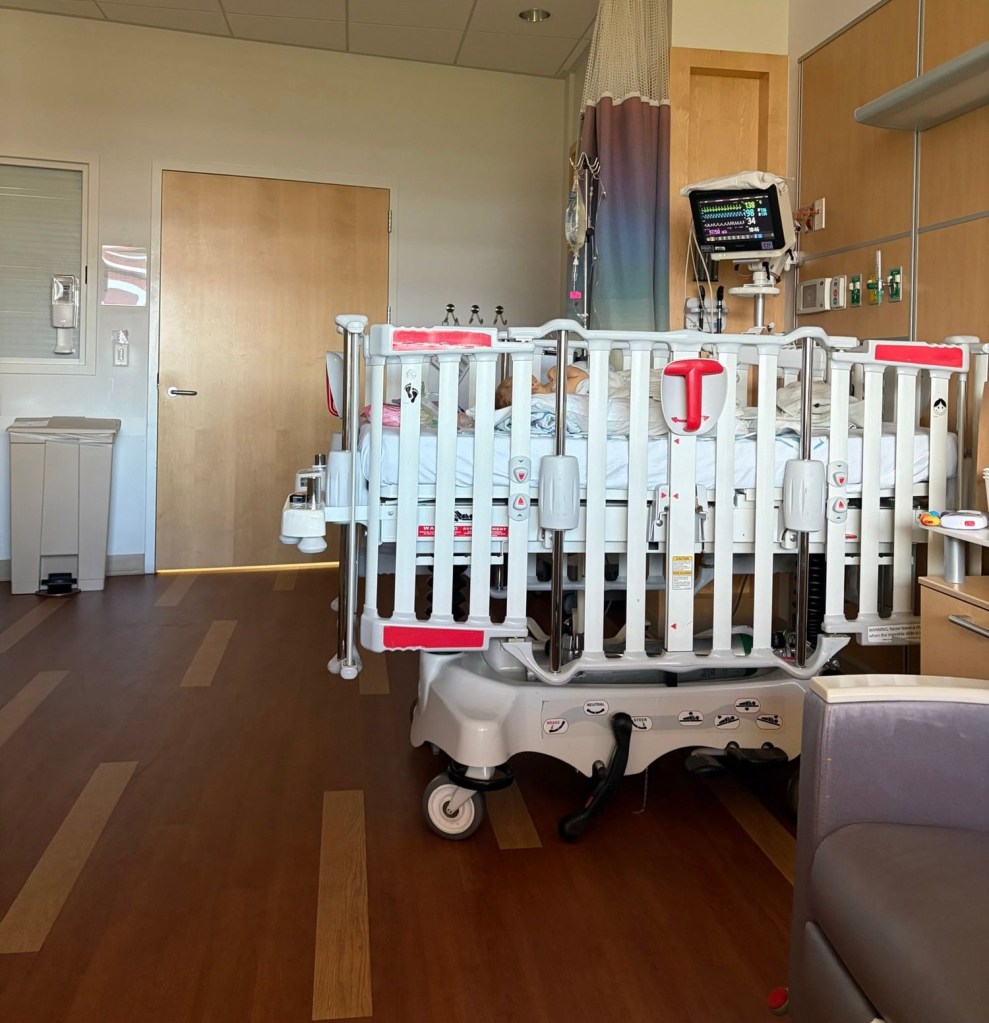
Ten years ago my dad took my sister and I to a little Mexican restaurant on the side of the road to break the news. Mom had been in the hospital a few days. There were tests, and the tests came back; bad news. A lot of that month is a blur for me, but my mom can recount the events with such clarity, no surprise there. I struggled then to understand her peace in the moment. This was stage IV cancer, for crying out loud! Ten years on, and a little further down the road in my own walk with the Lord, I understand her a little more only because I know Jesus a little more.

This is the original scan of mom’s tumor. We remarked the black cross drawn across the length of it as an accidental symbol of hope—but is anything accidental with God? No. 🙂

For instance, I know Him as the one who has provided, and is still providing, very, very expensive cancer medication. We’re talking medication worth thousands of dollars–sometimes as much as $16,000 for a single dose. And even though insurance has tried to cancel coverage many times, it always comes through. That’s Jesus.

I also know Him as the one who sends the right person at the right time to call or text or visit. In the early days, one dear friend who has since gone to be with Jesus intended only to stop by to drop off some soup mix. She stayed and ended up providing so much more with her gift of company and community. That’s also Jesus.

What sticks out to me most has been watching my mom’s trust in Jesus has grown. My mom is famous in our family for stopping in a store and talking to a woman for about 5 minutes, finding out that she is currently battling cancer, and then praying for her on the spot. I think God keeps sending her these people because He knows she’s not ashamed to tell them about what He’s done for her. I’ve witnessed this kind of organic, on-the-spot ministry dozens of times. That’s the work of Jesus in her being used to serve others.

Failure to trust

This week marks 10 years since our family was shaken, broken, challenged, and yet changed by God’s utter faithfulness. And with so many tangible examples of the goodness of God to my mother alone, you’d think I’d never struggle to trust God again for anything.

Wrong, wrong, wrong.

Because although I still have my mom, so much is uncertain and there is much to lose. I have a husband who wants to work a dangerous field, and I have hopes for the future I’m worried won’t be realized. The political climate is more tense than ever, and the “wars and rumors of wars”1 Jesus mentions in Matthew don’t feel so literary anymore. I read stories of tragedy and pain weekly, if not daily. Sometimes I feel ashamed that my heart is so heavy, inwardly asking, where is God in this mess?

Maybe you’ve asked God the same thing.

Gently down the stream?

This photo kills me. The rapid was called Troublemaker: a class III-ish rapid on the South Fork of the American river. We are getting thrashed and this dude in the background is just chilling, unbothered. 😂

A few weeks ago, we took our youth group to a climbing, camping, canyoneering, and rafting adventure camp. It was the kind where you sleep on the ground, drink water out of a little tin cup at dinner, and get to be unburdened by emails and cell phones and other modern annoyances.

I was excited to take another fun and meaningful trip with the students, but I’m not exaggerating when I say that I have never been so incredibly scared to do something in my life, specifically the river rafting. I’m not a strong swimmer. Water in general freaks me out. I think this summer I jumped off of my grandma’s diving board for the 5th time in my entire life. But fears must be faced, and Jesus can be trusted; what better way to face them than with the group I’m constantly telling to trust in Jesus?

The night before we rafted was hotter than hot, but that’s not why I wasn’t sleeping. I pulled my towel up over my head and pulled out my forbidden cell phone. The glow of the screen hurt my eyes as I clumsily typed into the search bar,

storiiies of christiaans with anxiety whit water rafting

I couldn’t believe it when a podcast link came up. Not only was the podcaster a Christian–she had just rafted the exact parts of the river my group was about to do! I lay on top of my bag and listened to the episode probably 6 times before I drifted off. Did I mention that that episode came out the day before we left on our trip? Or that that podcast’s usual content has nothing to do with rafting?

Yeah Jesus, I see you. That’s the first way I saw his faithfulness that week.

Peace like a river

The second way was on the river itself. On day one, we rafted the South Fork of the American, and day two was the famous Middle Fork, home of several well-known class IVs.

Day one panned out to be much more relaxed than I had anticipated. The water wasn’t terribly rough, and I knew that the stakes weren’t as high as they would be on the Middle Fork. I texted family from my sleeping bag the night before to pray, specifically for a fairly technical rapid called Tunnel Chute, which is famous for dumping rafters into the white water.

On day two, we stood atop the cliff overlooking the Tunnel Chute rapid to discuss things like paddling technique and safety measures, what to do if we fell out, and how many times to sing “Happy Birthday” if the river punched us into the deep hole at the base of the falls. Weirdly enough, I felt peace come over me, even though I had been shaking with fear minutes before. It occured to me how strange it is that scripture describes the peace of God like a river, because the water below me looked angry.2

We entered the boat. Our guide reviewed the commands one more time: right, left, forward, high side, get down. My boss Steve encouraged me to keep my eyes open– and man am I glad I did. It felt like only seconds of rowing in sync had gone by before we were instructed to get down and hold on, our guide still standing in the back working his tail off with his paddle. We dropped down the falls fast, the water roaring on all sides. Cold water washed over our heads. Suddenly the right side of the raft started to come up and I was sure we’d tip, but we didn’t. Out of the four rafts in our group, not a single person fell out. With shouts ringing off the tunnel walls, our boat shot down to the bottom of the falls in a nearly flawless run.

“That’s my first clean run of the season,” our guide admitted later with a laugh.

He’s in the boat

I think the best part of the trip was not even the thrill of the rapids themselves–although I still see tackling the class IVs as the coolest thing I have ever done. My favorite thing was learning how to trust the guide.

For example, I knew that the guide’s job was to direct us in the safest direction possible, but didn’t expect that to be smack-dab in what looked like the craziest part of the water. If we were moving forward, backwards, or even spinning in circles, our job was to do exactly as the guide said. If he said to paddle right, we paddled right. If he said to get down, we wedged our feet in and dropped to the bottom of the boat.

Yes, we were at the mercy of the river, and some rapids were more technical and had “more consequences” than others, but we also had an excellent guide who was trained to read the water and lead us in safety.

And he was in the boat with us.

My heart was overwhelmed as I realized how much closer Jesus is to me in life, whether the water is rough or smooth as glass.

“It is I. Don’t be afraid”

Matthew 14:22-33

Jesus and Peter on the Water by Gustave Brion, 1863

Matthew’s account of Peter walking out to Jesus on the water is usually told with the takeaway that if we keep our eyes on Jesus and not on the waves, the waves in life will not overtake us. I think my rafting trip helped me to see the story a little bit differently.

First of all, we know that Jesus was not afraid of the waves because He created them. He knew that He had authority over all of creation; Jesus was perfectly safe there.

After scaring the living daylights out of the disciples by walking, phantom-like, across the stormy waters in the middle of the night, Jesus calls Peter out onto the water with him. I think it’s important to note that the wind didn’t die down here. The external dangers didn’t just go away in the presence of Jesus.

In verse 30, it says that when Peter saw the wind, “he was afraid and, beginning to sink, cried out, “Lord, save me!”3 Right then, Jesus reached out his hand and caught him. What had never occurred to me was that Peter was actually safest on the water. There was no place in the universe safer for Peter than beside Jesus.

The view from my mat at camp.

For so much of my life I have given my fears far too much ground. Like Peter, I have stayed in the safety of the boat in disobedience, but that’s only caused me additional pain and confusion. What the wild waters of the American river taught me was that I am the most secure when I am trusting Jesus, doing what He says–whether that be to paddle right, left, forward, high side, or get down. I am most secure in Him, even if the wind and the waves don’t go away.

Whether it’s stage IV or a class IV, and even if my worst fears are realized, I know that I know that Jesus is in the boat with me, reading the water, looking out for strainers (that’s a fun bit of river-speak for “obstructions”), and working His tail off behind me–because the Savior who draws near truly loves me. He has saved me from death, and from a life of fear.

I can trust Him.

So can you.

Because he bends down to listen,
    I will pray as long as I have breath!
Death wrapped its ropes around me;
    the terrors of the grave overtook me.
    I saw only trouble and sorrow.
Then I called on the name of the Lord:
    “Please, Lord, save me!”4
How kind the Lord is! How good he is!
    So merciful, this God of ours!

-Psalm 116:2-5

  1. Matthew 24:6, “You will hear of wars and rumors of wars, but see to it that you are not alarmed. Such things must happen, but the end is still to come.” ↩︎
  2. Isaiah 66:12 ↩︎
  3. Emphasis mine ↩︎
  4. Emphasis mine ↩︎