This is the way The World Ends

In my senior English class I began the year, somewhat foolishly, by teaching Joseph Conrad’s Heart of Darkness. Even more foolishly, I chose to close the section out with T.S. Eliot’s “The Hollow Men.” You can imagine the strained, confused looks as we read the final lines of the poem, which continues to baffle even the best readers:

For Thine is

    Life is

    For Thine is the

     This is the way the world ends

    This is the way the world ends

    This is the way the world ends

    Not with a bang but a whimper.

The poem’s end imitates the children’s song, “Here We Go Round the Mulberry Bush,”–the combination of post-war disillusionment and cheery childhood creating an unsettling hymn.

This is the room I taught seniors in for more than half of the year. We shared a space with a church and this was a nursery. God bless those students for their flexibility.

That’s how the 2020-2021 school year seemed poised to go. After the chaos of 2020, I fully expected to hack my way through the jungles of Congo until summer when I could spend the next three months in hibernation. The jungle part turned out to be partly true, what with being isolated from grades 1-8 on a campus across town (I liked to call our little highschool campus “the colony”) for social-distancing at the beginning of the year, abrupt changes in staff, Santa Cruz literally catching on fire in the fall, sickness, masking protocols, not to mention battling my own case of impostor syndrome.

The last day of classes was “farmer and flannels day.” As a very serious Prunedalian, I showed up. 😂

In terms of my teaching experience and progress, I couldn’t help but resonate with Eliot’s “not with a bang” for much of the year. I could have been more patient and more understanding. At times I felt like my age and my inexperience were a giant, obvious billboard, and in my pride I attempted to cover myself with hardness. I know myself to be too careful and too avoidant to take risks, but God was merciful enough to let me fail so miserably that my only recourse was to cling tightly to Him. There were times that I felt the deep comfort in sensing that my strengths, and even more miraculously, my weaknesses were being used in ways specific to my story and personality. I felt the honing and humbling of God’s Spirit on me as I tried and failed many times to do well. I sensed His quenching and comforting, His gentle correction and love that inspired me to love. I became like George Herbert’s broken altar, forged with tears, as the Lord taught me to surrender my heart through the pain and the joy.

And thank the Lord, it wasn’t all gloomy! I’ll never forget our Philosophy block and how the 9th and 10th grade classes loved to get us off track with surprisingly fruitful discussions of what Heaven will be like, whether our pets will be there, and how we hope we’ll get to fly. I’m forever grateful to teach at a school so connected and small that taking students to discuss Dorthy Sayers at the nearby coffee shop was always an option. I’ll remember popcorn reading Chaucer in hushed tones in the lounge, watching in delight as the juniors genuinely laughed at the hilarious faults and foibles of Sir Topaz.
On the last day, my school celebrates Eschaton, which means “the end of the world” in the Greek (if you haven’t figured it out yet, Classical schools are just about reading old things and using them as fodder for inside jokes). It’s one huge field day complete with a tug of war, balloon toss, dunk tank, and an all-school dodgeball match. And, for the second time this year, all the grades were actually together, on one campus, laughing and playing, leading and being led. I watched one of my Sophomores lead the entire first grade in a chant as their tiny hands gripped the tug of war rope and saw the seniors being chased by a crowd of eight-year olds, their usually jaded expressions traded for grins. It was a day of togetherness and celebration and love and redemption. The pains of the year seemed to melt off as we played.


In the end we all stood on the field and sang the song that made me fall in love with this school in the first place: Nōn nōbīs, Domine, nōn nōbīs, sed nōminī tuō dā glōriam, or, “Not unto us, O Lord, not unto us, but to thy name give the glory” (Psalm 113:9).

After that song I packed up my things and left. The next day as the seniors graduated, the tune to Non Nobis rang again in my ears. Not to us, but for your glory, Lord. That’s what all of this has been about.

This year, this lost-on-the Congo, but-thank-heavens-Jesus-knows-the-way year was anything but what I had expected it to be, and I wouldn’t trade it or its many lessons of long-suffering and joy. In the new heavens, we are told that the darkness of the former world will pass away as the light of God becomes the sun (Rev. 21:23). I can’t really imagine what that will be like, but I do know that this life, this walk of faith, is inching its way toward that destination. And one day, as Samwise puts it in The Return of the King, all of the sad things will come untrue.

And so the year that was supposed to be a complete loss ended instead as an offering. I pray that I see every cloudy moment henceforth in this way.

For thine is

Life is

All to Him and His glory. 

Guinevere Claus is Coming to Town

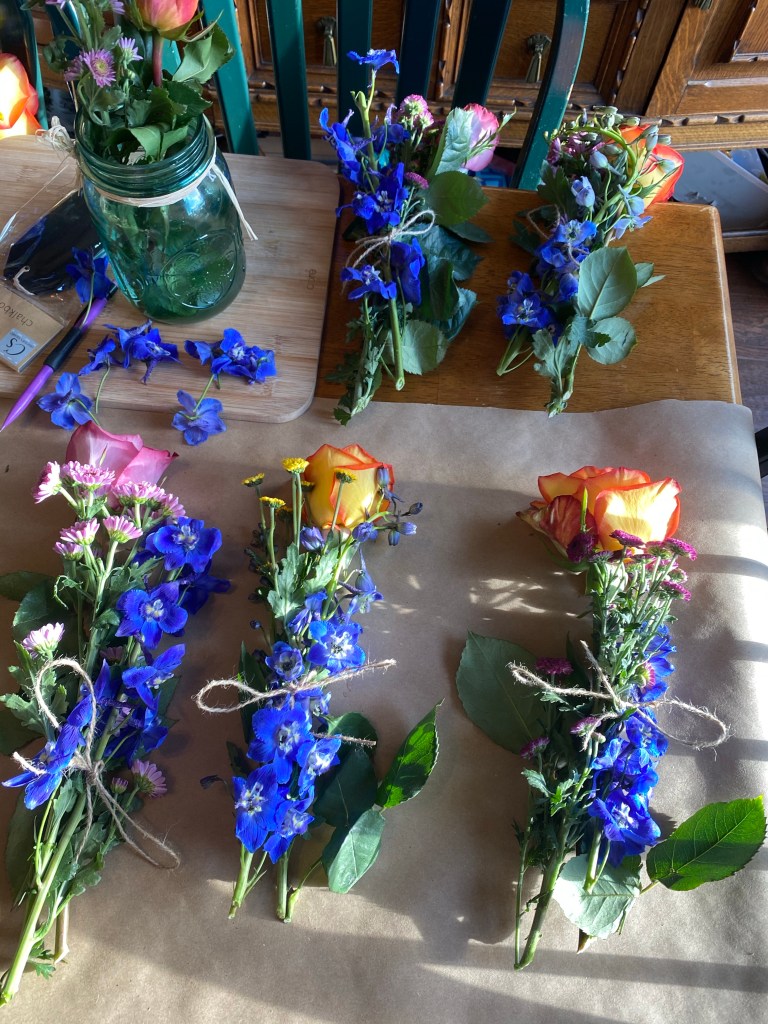
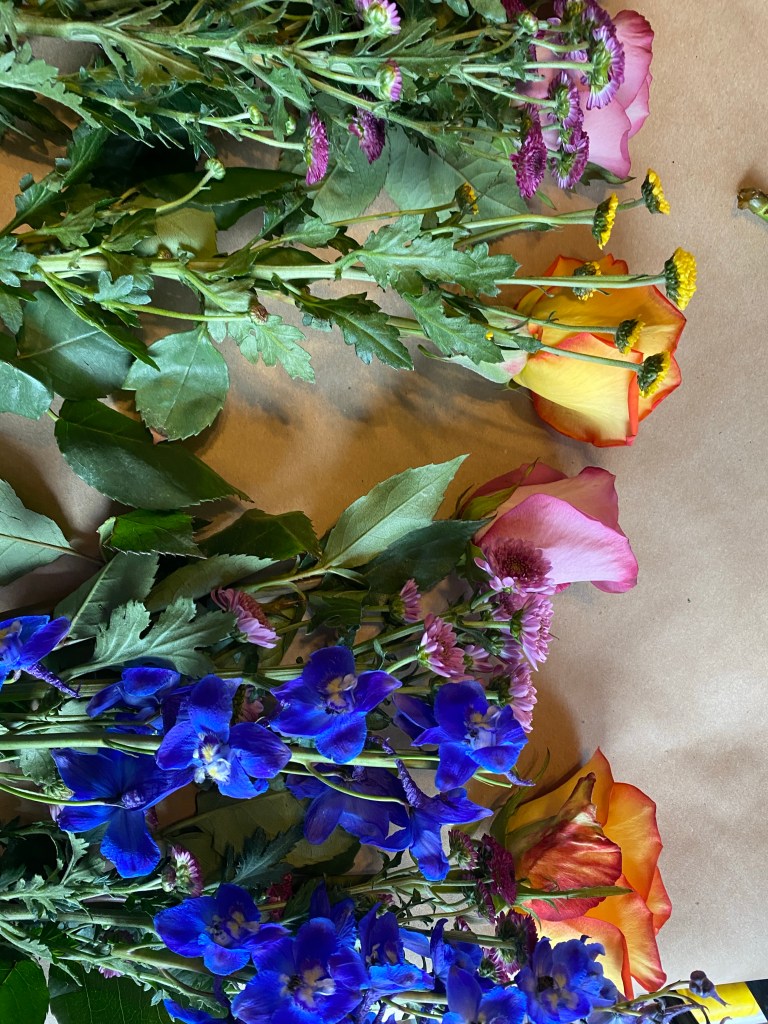
The story of the beautiful Queen Guinevere leaving adorable Richard Harris with a bowl-cut is one of the worst cinematic (but also theatrical and literary) tragedies in history, and if it weren’t for the wonderful music, my parents probably wouldn’t have let me watch Camelot so young (granted, we never watched the entire second half because adultery). Still, each year, “It’s May! It’s May! The lusty month of May!” rings out from my record player for reasons of nostalgia and general merry-making. Last year I started a tradition of making and delivering May-Day baskets, or rather rekindled it, as my mother used to do this with me when I was very young.

On my way back from my journey around the neighborhood this morning, a sweet older neighbor ran outside with two bouquets in hand: this year’s collection of button daisies and roses, as well as the one from last year. “I keep it hung on my wall” she said, pointing to the faded purple cone of dried blooms.

I owe my love for all things celebrations to my mom. When she was 12, she led a homespun parade through her neighborhood, recruiting local kids to sing and dance and march in Christmas costumes. My mom appeared, of course, as none other than Mrs. Santa Claus on roller skates. The newspaper did a write up on it. She made front page.

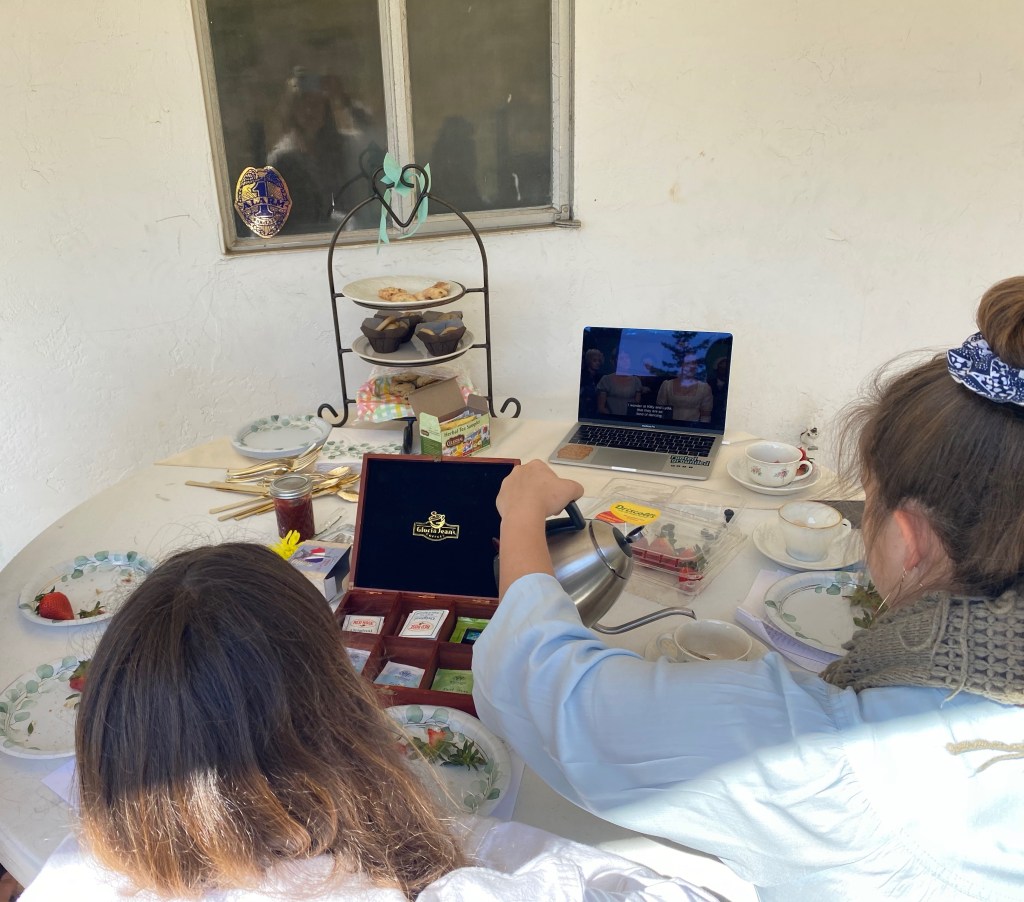
This last week, after my seniors had finished their study of Pride and Prejudice, I decided to throw a tea. We had scones, cookies, lots of berries, and plenty of laughs as we talked and watched the BBC version together. It reminded me of my high school days where I would force my friends to picnic with me in the middle of campus, lugging baskets of teacups and chicken sandwiches onto the school bus in an attempt to make the everyday a little more special.

Is is extra? Yes. My mom and I were discussing how our celebration drawers (two big drawers stuffed with gift tags, pretty ribbons, streamers, banners, and doilies) could benefit from a little Spring cleaning. But my philosophy is that if Jesus’ love is extravagant, we can afford to be a little extra sometimes, too. And there’s nothing wrong with that.

2 Corinthians 13:14 “The amazing grace of the Master, Jesus Christ, the extravagant love of God, the intimate friendship of the Holy Spirit, be with all of you.”

.

The House of Healing (or, Eowyn and Faramir deserved better, @Peter Jackson)

Creds: Jenny Dolphen Art

My first encounter with J.R.R. Tolkien’s Lord of the Rings series was a little too late in life. I was a Junior in highschool when I first saw the films. (Sadly I didn’t actually read the books until I was twenty three.) In the middle of the most academically challenging year of my highschool career, I reached for the things many sixteen year-olds find solace in: escapism in fantasy, adventure (stories of battles on horseback and arcane elven magic are far more compelling when you spend most of your time studying for Chemistry tests), and of course, romance. Like many girls my age, I dreamt of finding my own dark, mysterious ranger– bonus points if he resembled Viggo Mortensen. Lovers of the books know that the Peter Jackson films are far from perfect, but one of the things that grieves me most is the exclusion of one of the most beautiful love stories I’ve read. It’s not Aragorn and Arwen’s forbidden love–which reads as little more than a typology of Beren and Luthien–but the tale of Eowyn and Faramir. 

Eowyn, a beautiful and hard-nosed Shieldmaiden and niece of the King of Rohan first falls in love with the ranger Aragon. Of course, this love develops from afar. He is valiant and admirable and she becomes infatuated. But the love is one-sided. Aragorn rejects her and she heads to fight in the Battle of Pelennor, fully expecting death. After the battle in which she kills the Witch-King of Angmar, Eowyn suffers a fatal blow and is taken to rehabilitate in the Houses of Healing, albeit restlessly. She desires to fight, at one point even arguing with the Warden that “those who have not swords can still die upon them” (ch 5).

Also in the Houses of Healing is Faramir, the younger son of the Steward of Gondor. Like Eowyn Faramir is also rejected, not by a lover but by his father, the Steward of Gondor, who attempts to burn him alive. Though more noble than his brother Boromir, Faramir is second best in his father’s eyes. After incurring his own fatal wounds, he meets Eowyn in the Halls–and though she still harbors feelings for Aragorn, he begins to love her. At first glance, this is far from a Hollywood romance. As Faramir falls in love with the solemn lady in white, Eowyn gloomily meets his advances with ice.

It’s important to note that Eowyn never truly loved Aragorn. To her he was an idea–not a real man who she could know, and much more importantly, neither was he a man who could truly know her. It was his prowess and success that attracted her. At best, it was a crush; at worst, her feelings stemmed from a desire for glory.

As Eowyn and Faramir convalesce in the Houses of Healing, she sees herself as more prisoner than patient. She tells Faramir bitterly, “…I do not desire healing,’ she said. ‘I wish to ride to war like my brother Eomer, or better like Theoden the king, for he died and has both honour and peace.’” Though she rejects his love, Eowyn and Faramir become friends. They walk together in the garden, speaking, sitting in silence, healing.

Then one day, Faramir speaks his heart. He sees right through her:

“‘You desired to have the love of the Lord Aragorn. Because he was high and puissant, and you wished to have renown and glory and to be lifted far above the mean things that crawl on the earth. And as a great captain may to a young soldier he seemed to you admirable. For so he is, a lord among men, the greatest that now is. But when he gave you only understanding and pity, then you desired to have nothing, unless a brave death in battle. Look at me, Eowyn!’

And Éowyn looked at Faramir long and steadily; and Faramir said: ‘Do not scorn pity that is the gift of a gentle heart, Éowyn! But I do not offer you my pity. For you are a lady high and valiant and have yourself won renown that shall not be forgotten; and you are a lady beautiful, I deem, beyond even the words of the elven-tongue to tell. And I love you. Once I pitied your sorrow. But now, were you sorrowless, without fear or any lack, were you the blissful Queen of Gondor, still I would love you. Éowyn, do you not love me?’

Then the heart of Éowyn changed, or else at last she understood it. And suddenly her winter passed, and the sun shone on her.”

It is only when we feel the paralyzing light of exposure and the sweetness of grace that we can consider ourselves truly known, and it is only when we are understood in this way that we are truly loved. 

Thus, the most beautiful love stories are not the sweeping romances driven solely by eros but those where grace and understanding even in the midst of brokenness powerfully break through the shame and regret of the beloved, forming the strong base that is unconditional agape love. 

And it is God’s love that operates in just this way. 

The true House of Healing, then, is at the side of Jesus, reclining at the table and leaning against his breast; it is putting our fingers in his hands and side and accepting His grace in exchange for our many doubts; it is standing on the banks of the Sea of Galilee with Peter saying, “yes Lord, I love you” after denying him three times.

Through the sacred act of confession the Lord is able to bear our burdens and heal us. He gives beauty for our ashes and anoints our unworthy heads with His holy oil. He draws us to Himself knowing full-well that we are beggars unable to pay for His bread–but then he calls Himself “bread”–the zoe Bread of Life. Eowyn’s winter passes when she realizes that Faramir loves her in a way that Aragorn could not. He has seen her in her sadness and mourning. He has been the recipient of her ice and still longed to bring her into the sun. Miraculously, Faramir’s confession prompts a surprising change of heart in the once-grave Shieldmaiden. She cries, “I will be a shield- maiden no longer, nor vie with the great Riders, nor take joy only in the songs of slaying. I will be a healer, and love all things that grow and are not barren.’”

With love comes healing, and with healing, the desire to heal. The Gospel writer John writes that Christ’s love is the grand catalyst; we love because we were first loved and made lovely (1 John 4:19)

In the end, Eowyn admits that she no longer desires to be Queen. They embrace above the garden wall in the sight of many–an emblem of grace and the restorative power of unconditional love. When we accept the love of Christ, our desires change and we respond by laying our crowns at His feet. 

Sixteen year-old me knew infatuation (especially for fictitious rangers), but she did not fully know love because she had not yet allowed Love to know her. Allowing Christ in to see the crooked, cobwebbed parts of my heart has been a process spanning many years, and I expect it will continue for the rest of my life. I have put up barriers of my own and followed after lesser-loves who could not give me what my heart needed. Yet He pursued me, patiently healing my heart, walking with me in my mourning until I could finally accept that He, in fact, was the sun. 

Blooms in a Bucket

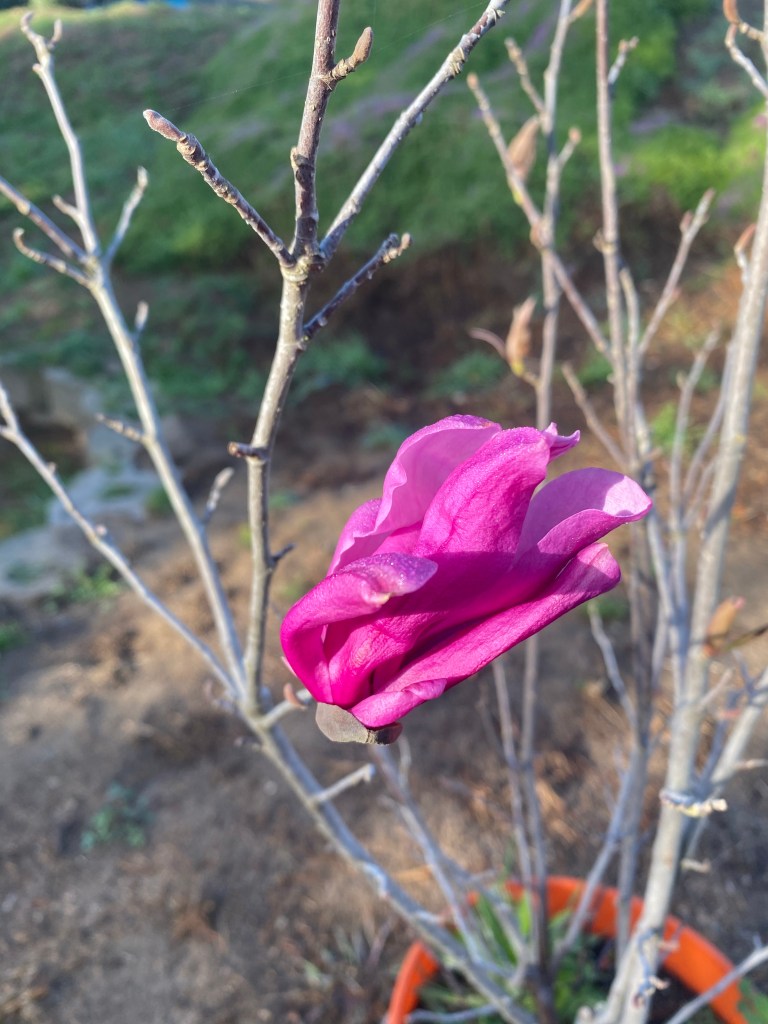
There is a Home Depot bucket in the center of our lawn containing a just-now-flowering tulip magnolia tree. I guess it’s not exactly on the lawn–it’s in the dirt section we cleared to landscape and hopefully plant that tree in… two years ago. It’s a really beautiful tree that honestly should be in the ground, but it seems to be doing well for now. The irony is that bright orange beacon of a bucket. I love how something so coarse—something so unexpected and almost foolish—could so effectively house something so lovely.

The month of March has been one giant mix of that same bloom of hope inside a Home Depot bucket. I wish I could say more about it, but for now I’ll just say that I applied for something at the beginning of the month, went through the process of hoping, then doubting-myself enough to throw the proverbial crumpled paper in the trash, subsequently removing said crumpled paper, and being more than pleasantly surprised at the result. I have things to look forward to for the following year. God has resurrected dreams and been faithful to bring them to fruition, and I am so thankful for his faithfulness.

On another note, friends has been a theme this month. The day of Saint Patrick’s Day I arrived home right after work, which, considering the fact that I am NEVER home before 10:30pm, was already cause for concern.

The day before I realized that I had been so excited for my Spring Break plans that I skipped not one, but two weeks of planning in my scheduled lessons:

March 29-April 2? Who is she? 🤦🏼‍♀️

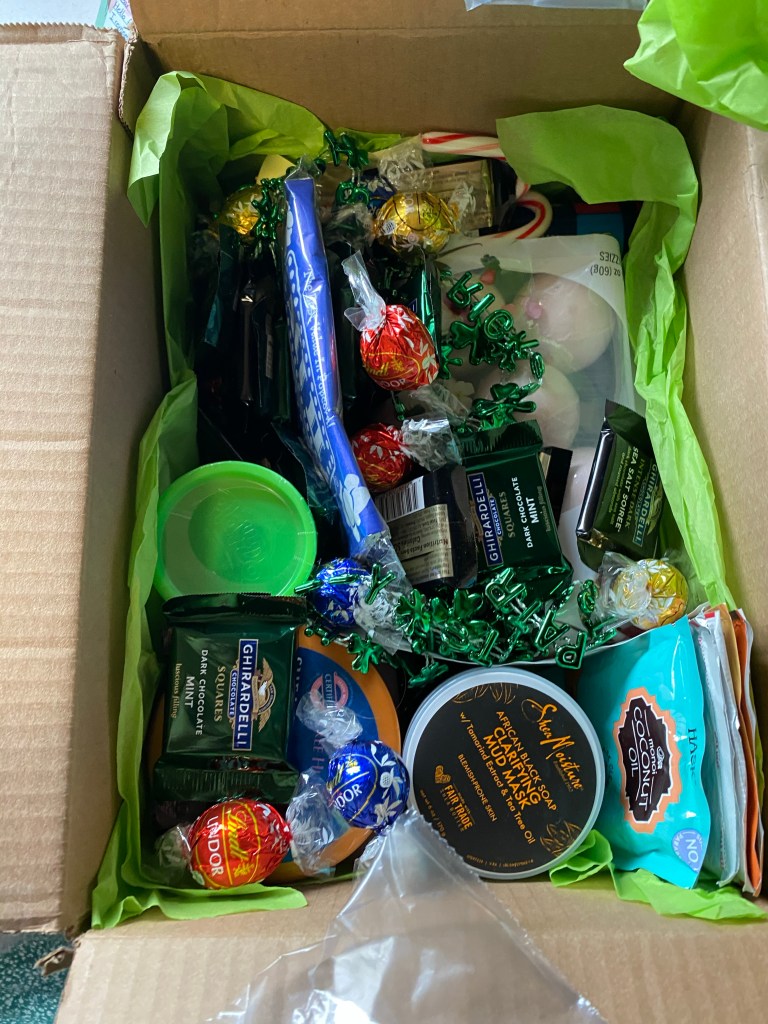
Anyway, my brain was a fried egg. When I got home, a box from my dear college friend, Erika, was waiting for me. Inside was the most thoughtful collection of gifts and trinkets: face mask and scrub for relaxation; tea, hot chocolate and apple cider to drink while I relax; Ghiradelli squares for that chocolate fix; play dough for stress-relief (I’ve used that a ton this week); glow sticks for funzies, and two shamrock necklaces for St. Patty’s. It was the most thoughtful and timely thing. In her note, she mentioned how I had looked tired on our Zoom call a week before and even if she couldn’t directly help lighten the load, at least she could lighten my spirits. What an amazing friend.

The box was timely in other ways, too. Days later I received a series of sobering letters from an old friend. I’ll spare the details, but it was a less-than-joyful subject. I questioned my ability to call myself a good friend and fell into a slump, but the somber feeling lasted only for a day because God blessed me one more time with a surprise AM visit from my best friend. We drank tea and gloried in God’s faithfulness to both of us. We only had two hours, but those two hours were desperately needed. I’m still in awe of this ten year friendship that has, by the grace of God, survived military-induced communication barriers and lots of long-distance. I love you, Toler!!

Rules for surprise Kenzie visits: 1) She will come in without warning (she knows our door code), probably holding a cat she picked up outside. 2) She will walk in wearing shoes, take them off, and leave without said shoes, resulting in you chasing her car for a few seconds down the street before she realizes what’s going on. This will never change.

Speaking of friends, my other best friend and I celebrated nine months together last week! We sat on the phone last night reviewing the photos we’ve sent each other over the course of our relationship. It was sweet to see us progress from the tentative, safe realm of food photos to weirder memes as we got more comfortable. Hilarity ensued. Here are some of the greats:

One of the high school students made some creative edits of Mr. Chartier. MIB? MIBPS? (Men in blue pinstripes??)
My plague mask I was THIS close to buying. It seemed so fitting back in the lockdown world of June 2020.
Calvin’s bunny outfit that apparently got him in huge trouble in high school. It was a security issue, but still—sometimes I wish educators would lighten up enough to let their students actually enjoy school.

The last one is one of the reasons we’re dating. When the head of our church’s pantry asked if I wanted a partner to help me pick up the bread we’d distribute, I knew it was my in for asking Calvin to hang out. Later on she clarified that I didn’t actually need help. I didn’t tell him that until later. The rest is history. 😉

Speaking of God’s faithfulness, this sweet man brought me a surprise latte in between my parent teacher conferences Wednesday. I didn’t realize how stressed I had been until I was able to hold my coffee and be held for a minute. About a year ago I went through the most painful breakup of my life, and I’ve never been more grateful for anything because it meant finding someone who gets me and makes me laugh and encourages me to look to Jesus in everything. I love him so much. He works hard at school and digs trenches for work like a character in Les Miserables without complaining. He brings me lattes at work and I love listening to him play guitar and crush it at his CrossFit competitions.

He is the unexpected flowers in the Home Depot bucket and I am in awe of a God who would bless me so richly.