Yeast and Yard work

In the 5th grade, two things were certain. Hannah Montana was the best show ever created, and I would never have to get a real job because the world was ending in 2012.

I guess somewhere between my Disney Channel binges and listening to popular playground theology a’la Left Behind (and some conversations about the rapture with my dad), I had come to the conclusion that the end of the world was better than growing up choosing a career path I wasn’t sure I’d like. My mom and dad were both very fulfilled in their jobs as a teacher and millwright, so I’m not sure where I formulated this idea that the moment I started working, my life would be reduced to monotony. Perhaps it was from watching the adults who hated their jobs on TV? Maybe I can blame the Disney Channel binges after all.
.

I write this from a moment in history which, for many, feels like the end of the world. The impact of Covid19 has been felt all around the globe, and if it has not affected your life via infection, it has at least impacted your work.

In the first couple weeks of quarantine yeast was scarce, which TBH made me feel like I was in the world of the Hunger Games. Side note: I bought my sister a bow for Christmas but forgot a set of arrows. Weeks ago when reports went out that meat was becoming scarce in the stores, I seriously considered ordering arrows—but then again, what could I shoot? Squirrels? Proof that Covid makes us crazy.

Anyway, it turns out that yeast wasn’t scarce because people were starving and truly needed to bake bread.

After being cooped up in their homes, they were bored. They wanted something to do!

The serial bakers weren’t the only ones. One family I know photographed themselves in monochrome each day, cycling through the colors of the rainbow in impressively coordinated outfits.

My sister has successfully started three quarantine projects, including painting a pair roller skates (each side with a different, famous Van Gogh work), decorating the covers of several hardback Bibles, and teaching herself ukulele.

In my own restlessness, and between teaching online and taking my own classes I put together a planter box, restarted my garden, and built the Taj Mahal chicken coop of my dreams (still to be finished).

Despite the economic impact, the devastation of the lives lost, not to mention the inevitable changes we will all adapt to once we’re finally allowed to reenter society, I can’t help but wonder if this is all making us more…human. 

Allow me to take you back to the beginning. Not the beginning of quarantine, or even the start of this tumultuous year, but to our beginning. Back to Eden.

In the beginning God makes the Earth and creates a Garden and places the man in it, “to work it and keep it” (Genesis 2:15).

Before sin even enters the world the man is given the Garden to tend and the animals to name. Many of us associate work with the curse and yet, Adam was called to work before the curse had taken hold. To many, the idea of work is Hell, and understandably so. In Genesis 3, after sin enters the world, God casts the man and woman from the Garden, relaying the resulting curse. Adam’s curse specifically has to do with his work (Gen. 3:17-19). No longer will the plants grow without effort. From then on, life would be hard, and work would be work.

Yet, going back to the time before the curse, it seems that work was part of God’s good plan for us. Right after Adam’s creation, his first task is to work:

“The Lord God took the man and put him in the garden of Eden to work it and keep it.” 

Gen. 2:15

Could it be, then, that we were actually made to work? To create with our hands, to add value, and to make things lovely, because we were made in the image of the Father who does exactly that?

We learn of God’s desire for His creation to create when He says, “Be fruitful and multiply. Fill the earth and govern it” (Genesis 1:28). This is not merely a request that his children simply have more children, but a command to multiply all that is given in His grace. The command to work and to be fruitful is not a result of sin because it preceded the Fall. It means that as Christians, we are called to work. We are invited to create as our Father created, using our gifts, our resources, and our time to be fruitful and multiply, making God’s beauty and glory known to the world.
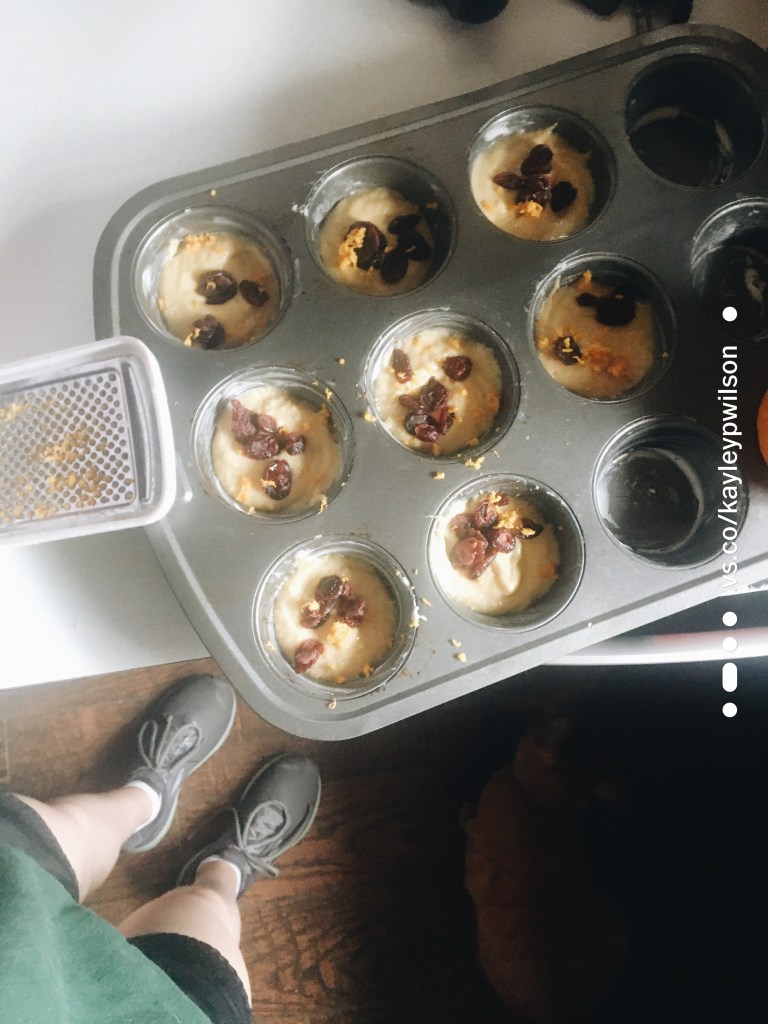
Going back to baking and gardening and, in my case, building a chicken coop, perhaps quarantine has been the reset some of us needed to begin working again–and I don’t just mean showing up to a job each day. There is a difference between dispassionate work as unto man and passionate work as unto the Lord (Colossians 3:23). I was somewhat lucky that my job as a teacher was only slightly changed. In-person learning became distance learning, and my resilient and computer-savvy band of 7th graders were champs and learned how to navigate Google classroom in a matter of days. And while some friends of mine who were not so lucky settled into quarantine with nothing to pass the time but whatever they hadn’t already watched from their Netflix queue, I have been encouraged by the ones who answered that Edenic call to create.

As God’s creatures who are wholly dependent on Him to sustain us, we were made to rest, as demonstrated by the Lord on the 7th day of Creation. However, we were also made to work. It’s a desire that is simply built into us. And so, when we are displaced and told specifically not to go to work, we begin crocheting and baking until the world smells of crusty, yeasty bread and breathes a little deeper than it did before. I pray that this time brings about an awareness of the beauty and creativity of God, both for those who know Him and for those who don’t yet.

While an invisible virus sweeps the planet and unmakes our long held plans, may we be fruitful and multiply and make.

May we collapse from our crude scaffolds and fall backwards toward childlike dependance, building glistening, intricate structures from His abundance.

And may we reflect our Creator, using our newfound time to work and to create beautiful things.

The Thorn in the Side of my Head

I always thought it ironic that I quit eating cheese two months before I went to Paris for my 16th birthday. Cheese was like, a Paris thing, and yet I found myself refusing it the whole two weeks were were there.

“Je voudrais une soupe à l’oignon…no gratin?” The waiter stared at me, confused.

“No… gratin?” he repeated.

“No fromage, s’il vous plaît?” I asked sheepishly.

With a week of reading from my French translation book and a handful of lessons from my Nana as a child, I wasn’t sure how to say what I really meant which was somewhere along the lines of, ” Look. I can’t do the cheese on top, even though I really want it, because it will give me a headache–and then again, everything these days gives me a headache. And I’m just really tired and feel really helpless that my head won’t stop hurting, and I can’t find my translation book, but I’m doing my best here, so may I please have the onion soup without the grated cheese on top? Thank you.” Insert giant shrug here.

The waiter nodded, still confused by my language, and walked off while I withdrew from the noise of the tourist-packed restaurant into the uncertain future I was conjuring in my mind.

A few years later, I would sit at my kitchen table across from my dad, tears soaking my unfinished Econ homework.

“I want to…hic…grow up…hic…and get married and live my life and…and…who would want to be with someone with..hic…CHRONIC HEADACHES?”

I sobbed and sobbed while my poor dad tried his best to make out my words. The tears were rolling fast, falling from the place where pent up frustration with not being “normal” was kept. My dad understood. I was in high school and wanted to hang out with friends without having to go home early because I forgot to bring Tylenol. I wanted to stop living with the fear of brain tumors, or of dying alone because no one could want a girl who, God forbid, had to take naps once in a while. (That last fear screams teenage angst and I laugh as I remember this being a very real, high-priority concern of sixteen year-old me).

Two years later was my worst summer. It started with a CT scan to see if I had a brain tumor, followed by bloodwork, a largely inconclusive allergy test, and the recommendation from a doctor that I should see a neurologist.

The chronic headaches began when I was 16. I am now on the edge of 24. I write this from my back porch, wrapped in a blanket against the late spring chill with the familiar, slow throb of pain in my head. What’s different now is that I no longer curse it. I’ve learned to find the beauty that lies behind this thorn.

Grace for Dummies

In 2 Corinthians 12, Paul describes the “thorn” of the enemy that taunts him. I’ve always thought it interesting that Paul did not do us the pleasure of disclosing what that thorn actually was.

Was it jealousy?

Lust?

Did Paul suffer from a chronic illness?

Even the best Pauline scholars are left scratching their heads with the rest of us. What we know is that this thorn caused Paul torment, and though he fervently asked God to remove it three times, the Lord allowed it to remain. Paul wanted to be free from this burden. God had a different plan:

“Three times I pleaded with the Lord to take it away from me. But he said to me, “My grace is sufficient for you, for my power is made perfect in weakness.” 

2 Corinthians 12:8-9a

How’s that for an answer? Paul had a chronic thorn he wanted to be rid of. Instead of removing it, the Lord pointed at the very thing he despised and called it grace.

This isn’t the first time God uses weakness to put his strength on display. In fact, it seems to be one of the Lord’s favorite pastimes to use the broken to show his glory (1 Corinthians 1:27). The Bible is absolutely littered with these glorious images of ineptitude:

Sara was too old to give birth (Genesis 18:10-14).

Moses had a stutter (Exodus 4:10).

Hannah was barren (1 Samuel 1:6-20).

David was an adulterer and murderer (2 Samuel 12:6-12).

Isaiah had unclean lips (Isaiah 6:5-7).

Peter denied he even knew Jesus (Luke 22:61-62).

In every story, God used human weakness to reveal His strength. Moses could’ve been born a perfect orator–but what opportunity would that be to reveal the Lord’s power to Pharaoh? And what opportunity would that have given Moses to rely on the Lord?


Lord of the Lonely

As far as “thorns” go, headaches are strange. Unlike a broken leg, which will always garner special treatment, the headache (like mental illness or any other chronic disease) remains the ever-invisible injury. Everyone wants to sign your cast, but no one will ever sign “get well soon” on your temple in the middle of a migraine.

Thus, it’s a lonely experience. Luckily, the Lord knows Lonely. A man of sorrows and well-acquainted with grief, Jesus is very familiar with suffering solo (read Isaiah 53).

During his earthly ministry, Jesus beautifully comes alongside the lonely and suffering, often defying Jewish custom and angering the local clergy in order to heal them. For instance, the Woman with the Issue of Blood (read Mark 5:25-34.). In Jewish culture and under the Law of Moses purity was paramount. Touching blood made one ceremonially unclean–therefore women were considered “unclean” for at least a few days out of every month.

Now picture a woman who had been unclean, unnoticed, untouched, and uncomforted–not for days, but for twelve years. After spending all she owned on doctors who could not stop the hemorrhaging, she turned to Jesus for healing. Reaching for the back of his cloak, she gave a gentle tug. Surely the Rabbi would not notice her, not with the sea of people surrounding him.

And yet, when the woman touches Jesus, it is faith and her desperate touch, not the brush of the crowds around him, that captures his attention. Jesus turns and she is caught in his gaze. She comes away completely healed because of her faith.

Sanctification through Suffering

Perhaps one day, I will wake up headache free and never have to take a single capsule of ibuprofen again. I fully believe the Lord could heal me in an instant if that as His will, just like the woman in Mark 5.

But what if he does not take our thorns in this life? What then? This Charles Spurgeon quote has always brought comfort to my soul:

“I have learned to kiss the waves that throw me up against the Rock of Ages.”

It is man’s natural inclination to pursue pleasure and avoid pain, but the Cruciform life turns that worldly paradigm on its head. Just as Christ suffered for the joy that was set before him, we endure trials with the knowledge that they produce in us something of Heaven. In the paradoxical ways of the Kingdom, no one can truly live until they die (John 2:24).

Even if the healing does not come in this life, I have faith that something else–something of eternal significance– is being produced, coming up like a daffodil after the frost.

Paul finishes his thorn-account with this encouragement:

“Therefore I will boast all the more gladly about my weaknesses, so that Christ’s power may rest on me. That is why, for Christ’s sake, I delight in weaknesses, in insults, in hardships, in persecutions, in difficulties. For when I am weak, then I am strong.”

2 Corinthians 12:9b-10
A little May Day surprise I left for an elderly neighbor a few weeks ago.
Through my chronic pain, the Lord has cultivated in me compassion for the lonely.

My headaches have brought me to my knees more times than I can count, but I no longer curse them.

In moments of praying desperately that I won’t explode at the person who happens to be bothering me while I’m in the middle of particularly bad episode, I have felt his hand on my shoulder reminding me to give them grace.

In the long, sleepless nights when the Tylenol, steam shower, and peppermint oil just aren’t cutting it, I know He is there to comfort me through the pain.

I may not be healed in this lifetime. Is God still good? Absolutely. His Word and His Spirit, and the work of Jesus on the cross reveal both His character, and his will for my life here and in Heaven.

And as I walk through this life bearing this thorn, I can trust that Jesus is also bearing me up, pouring out grace and strength for my weakness as He teaches me to follow him.

When the Notes app just won’t do anymore

Why don’t you start a blog?

If you’re reading this, you are either my mom, my Facebook friend, or someone I sent a link to with the quiet request that you look for leftover typos.

This is technically my first shot at blogging, though I have been writing devotionals and life snippets on my Instagram for the last 5 years or so (you can find me at @kayleylikescats).

What do you need to know about me? Nothing, really, but I’ll tell you anyway.

My name is Kayley Wilson, and I live in a small, semi-rural town on the Central California coast. I say semi-rural since we have chickens, but I’m also only a 5-minute drive from grabbing a flat white from that cute, local, totally unique coffee shop down the road called Starbucks.

I live for planting seeds in the sandy earth and waiting to see what comes up, which doesn’t necessarily make me a good gardener, but a very enthusiastic one. My safe-haven, prayer room, jam-session spot, and the place of my re-conversion is my vegetable garden, and I like to spend as much time as I can there, sipping coffee and watching my corgi, Hermione, zip around the yard.

For the last year and a half I have been working toward my MA in Biblical Studies, but prior to that I was an English major moonlighting as a Bible major (aka making all my papers about Christ-figures and reading Peter Leithart articles on my breaks between essays).

These days you can find me teaching, running, baking bread, and trying to learn the guitar intro to “Dust in the Wind.”

I love classic rock, a good taco plate, and any opportunity I can get to talk about Jesus, who has captured my heart and haunted my life with his beauty and grace.

I’m so glad you’re here.

Enjoy!

-Kayley