He’s in the boat: On doubting Jesus, cancer, and river rafting

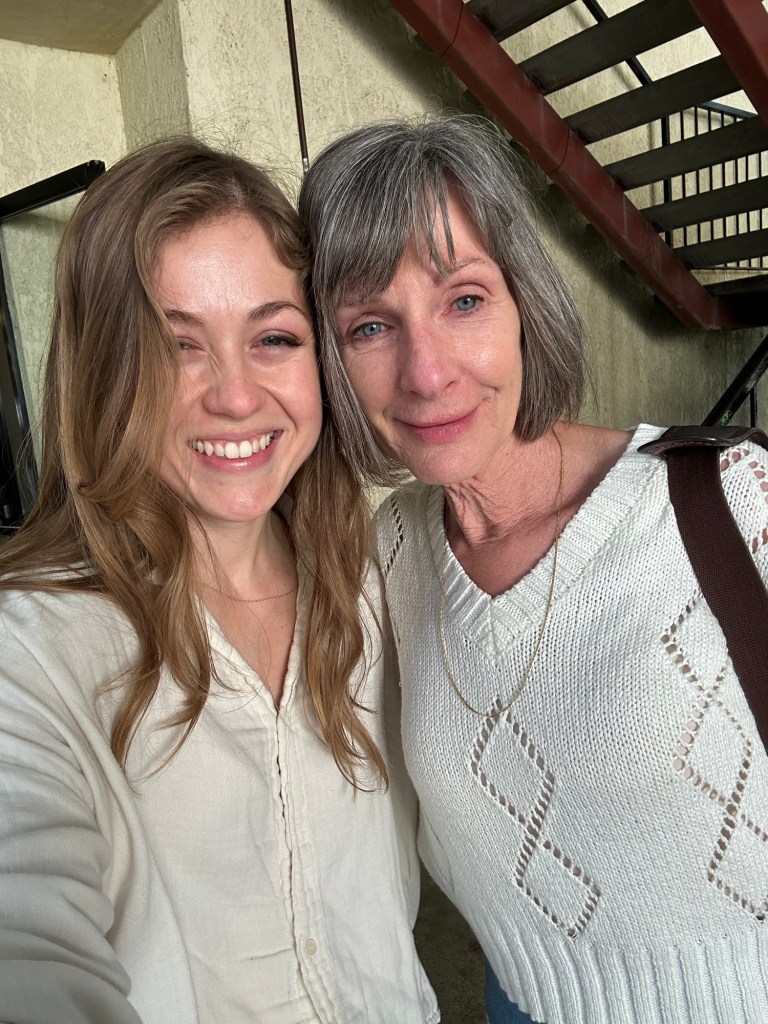
Ten years ago my dad took my sister and I to a little Mexican restaurant on the side of the road to break the news. Mom had been in the hospital a few days. There were tests, and the tests came back; bad news. A lot of that month is a blur for me, but my mom can recount the events with such clarity, no surprise there. I struggled then to understand her peace in the moment. This was stage IV cancer, for crying out loud! Ten years on, and a little further down the road in my own walk with the Lord, I understand her a little more only because I know Jesus a little more.
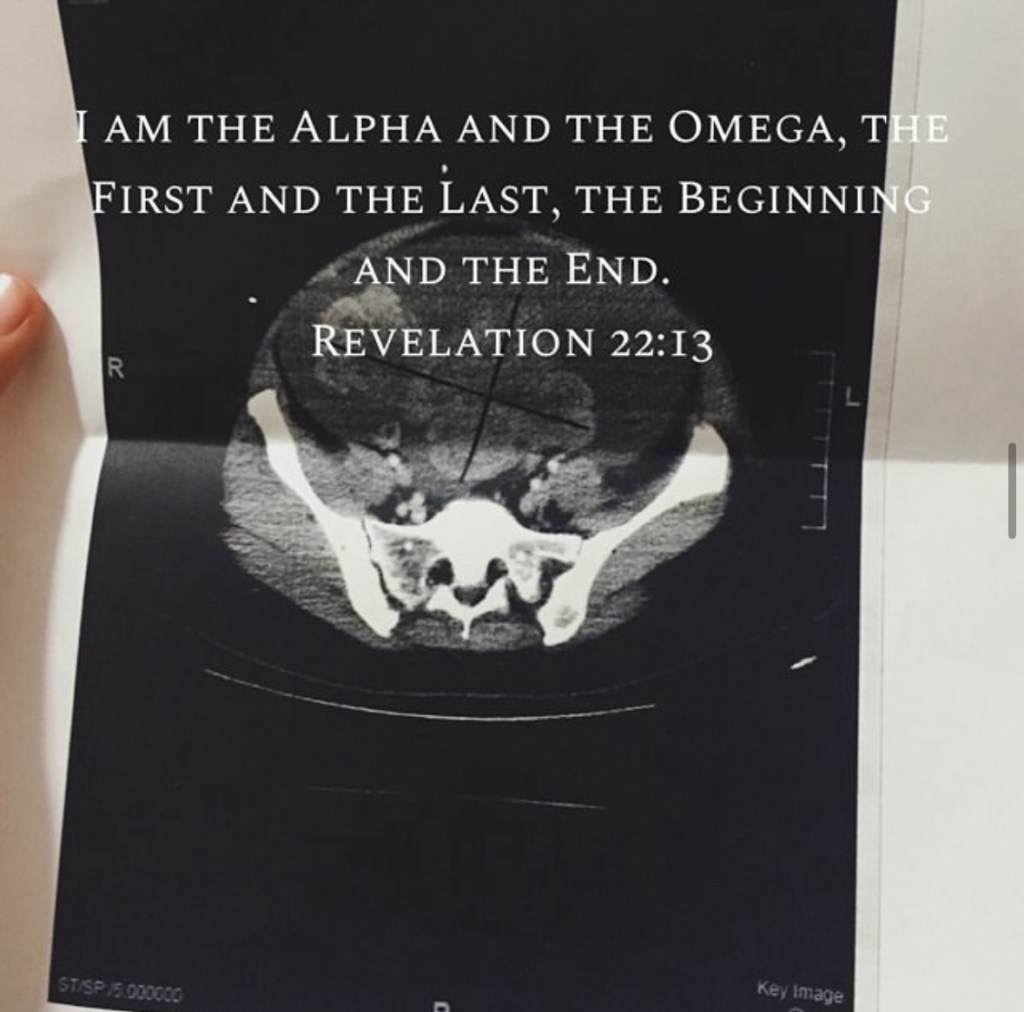
This is the original scan of mom’s tumor. We remarked the black cross drawn across the length of it as an accidental symbol of hope—but is anything accidental with God? No. 🙂

For instance, I know Him as the one who has provided, and is still providing, very, very expensive cancer medication. We’re talking medication worth thousands of dollars–sometimes as much as $16,000 for a single dose. And even though insurance has tried to cancel coverage many times, it always comes through. That’s Jesus.

I also know Him as the one who sends the right person at the right time to call or text or visit. In the early days, one dear friend who has since gone to be with Jesus intended only to stop by to drop off some soup mix. She stayed and ended up providing so much more with her gift of company and community. That’s also Jesus.

What sticks out to me most has been watching my mom’s trust in Jesus has grown. My mom is famous in our family for stopping in a store and talking to a woman for about 5 minutes, finding out that she is currently battling cancer, and then praying for her on the spot. I think God keeps sending her these people because He knows she’s not ashamed to tell them about what He’s done for her. I’ve witnessed this kind of organic, on-the-spot ministry dozens of times. That’s the work of Jesus in her being used to serve others.

Failure to trust

This week marks 10 years since our family was shaken, broken, challenged, and yet changed by God’s utter faithfulness. And with so many tangible examples of the goodness of God to my mother alone, you’d think I’d never struggle to trust God again for anything.

Wrong, wrong, wrong.

Because although I still have my mom, so much is uncertain and there is much to lose. I have a husband who wants to work a dangerous field, and I have hopes for the future I’m worried won’t be realized. The political climate is more tense than ever, and the “wars and rumors of wars”1 Jesus mentions in Matthew don’t feel so literary anymore. I read stories of tragedy and pain weekly, if not daily. Sometimes I feel ashamed that my heart is so heavy, inwardly asking, where is God in this mess?

Maybe you’ve asked God the same thing.

Gently down the stream?
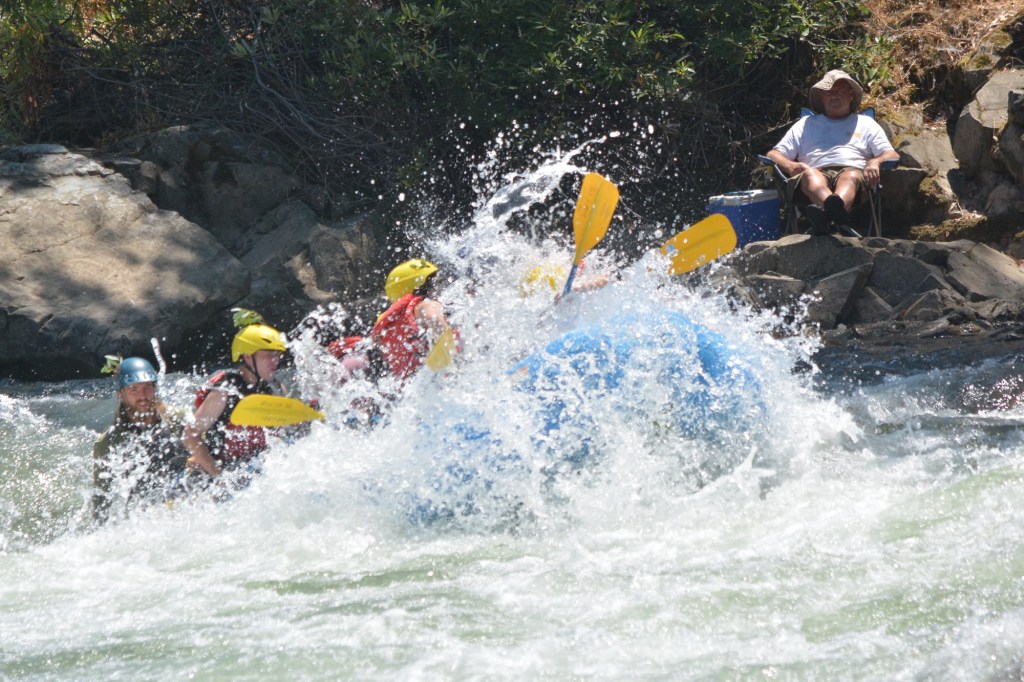
This photo kills me. The rapid was called Troublemaker: a class III-ish rapid on the South Fork of the American river. We are getting thrashed and this dude in the background is just chilling, unbothered. 😂

A few weeks ago, we took our youth group to a climbing, camping, canyoneering, and rafting adventure camp. It was the kind where you sleep on the ground, drink water out of a little tin cup at dinner, and get to be unburdened by emails and cell phones and other modern annoyances.

I was excited to take another fun and meaningful trip with the students, but I’m not exaggerating when I say that I have never been so incredibly scared to do something in my life, specifically the river rafting. I’m not a strong swimmer. Water in general freaks me out. I think this summer I jumped off of my grandma’s diving board for the 5th time in my entire life. But fears must be faced, and Jesus can be trusted; what better way to face them than with the group I’m constantly telling to trust in Jesus?

The night before we rafted was hotter than hot, but that’s not why I wasn’t sleeping. I pulled my towel up over my head and pulled out my forbidden cell phone. The glow of the screen hurt my eyes as I clumsily typed into the search bar,

storiiies of christiaans with anxiety whit water rafting

I couldn’t believe it when a podcast link came up. Not only was the podcaster a Christian–she had just rafted the exact parts of the river my group was about to do! I lay on top of my bag and listened to the episode probably 6 times before I drifted off. Did I mention that that episode came out the day before we left on our trip? Or that that podcast’s usual content has nothing to do with rafting?

Yeah Jesus, I see you. That’s the first way I saw his faithfulness that week.

Peace like a river

The second way was on the river itself. On day one, we rafted the South Fork of the American, and day two was the famous Middle Fork, home of several well-known class IVs.

Day one panned out to be much more relaxed than I had anticipated. The water wasn’t terribly rough, and I knew that the stakes weren’t as high as they would be on the Middle Fork. I texted family from my sleeping bag the night before to pray, specifically for a fairly technical rapid called Tunnel Chute, which is famous for dumping rafters into the white water.

On day two, we stood atop the cliff overlooking the Tunnel Chute rapid to discuss things like paddling technique and safety measures, what to do if we fell out, and how many times to sing “Happy Birthday” if the river punched us into the deep hole at the base of the falls. Weirdly enough, I felt peace come over me, even though I had been shaking with fear minutes before. It occured to me how strange it is that scripture describes the peace of God like a river, because the water below me looked angry.2

We entered the boat. Our guide reviewed the commands one more time: right, left, forward, high side, get down. My boss Steve encouraged me to keep my eyes open– and man am I glad I did. It felt like only seconds of rowing in sync had gone by before we were instructed to get down and hold on, our guide still standing in the back working his tail off with his paddle. We dropped down the falls fast, the water roaring on all sides. Cold water washed over our heads. Suddenly the right side of the raft started to come up and I was sure we’d tip, but we didn’t. Out of the four rafts in our group, not a single person fell out. With shouts ringing off the tunnel walls, our boat shot down to the bottom of the falls in a nearly flawless run.

“That’s my first clean run of the season,” our guide admitted later with a laugh.

He’s in the boat

I think the best part of the trip was not even the thrill of the rapids themselves–although I still see tackling the class IVs as the coolest thing I have ever done. My favorite thing was learning how to trust the guide.

For example, I knew that the guide’s job was to direct us in the safest direction possible, but didn’t expect that to be smack-dab in what looked like the craziest part of the water. If we were moving forward, backwards, or even spinning in circles, our job was to do exactly as the guide said. If he said to paddle right, we paddled right. If he said to get down, we wedged our feet in and dropped to the bottom of the boat.

Yes, we were at the mercy of the river, and some rapids were more technical and had “more consequences” than others, but we also had an excellent guide who was trained to read the water and lead us in safety.

And he was in the boat with us.

My heart was overwhelmed as I realized how much closer Jesus is to me in life, whether the water is rough or smooth as glass.

“It is I. Don’t be afraid”

Matthew 14:22-33

Jesus and Peter on the Water by Gustave Brion, 1863

Matthew’s account of Peter walking out to Jesus on the water is usually told with the takeaway that if we keep our eyes on Jesus and not on the waves, the waves in life will not overtake us. I think my rafting trip helped me to see the story a little bit differently.

First of all, we know that Jesus was not afraid of the waves because He created them. He knew that He had authority over all of creation; Jesus was perfectly safe there.

After scaring the living daylights out of the disciples by walking, phantom-like, across the stormy waters in the middle of the night, Jesus calls Peter out onto the water with him. I think it’s important to note that the wind didn’t die down here. The external dangers didn’t just go away in the presence of Jesus.

In verse 30, it says that when Peter saw the wind, “he was afraid and, beginning to sink, cried out, “Lord, save me!”3 Right then, Jesus reached out his hand and caught him. What had never occurred to me was that Peter was actually safest on the water. There was no place in the universe safer for Peter than beside Jesus.
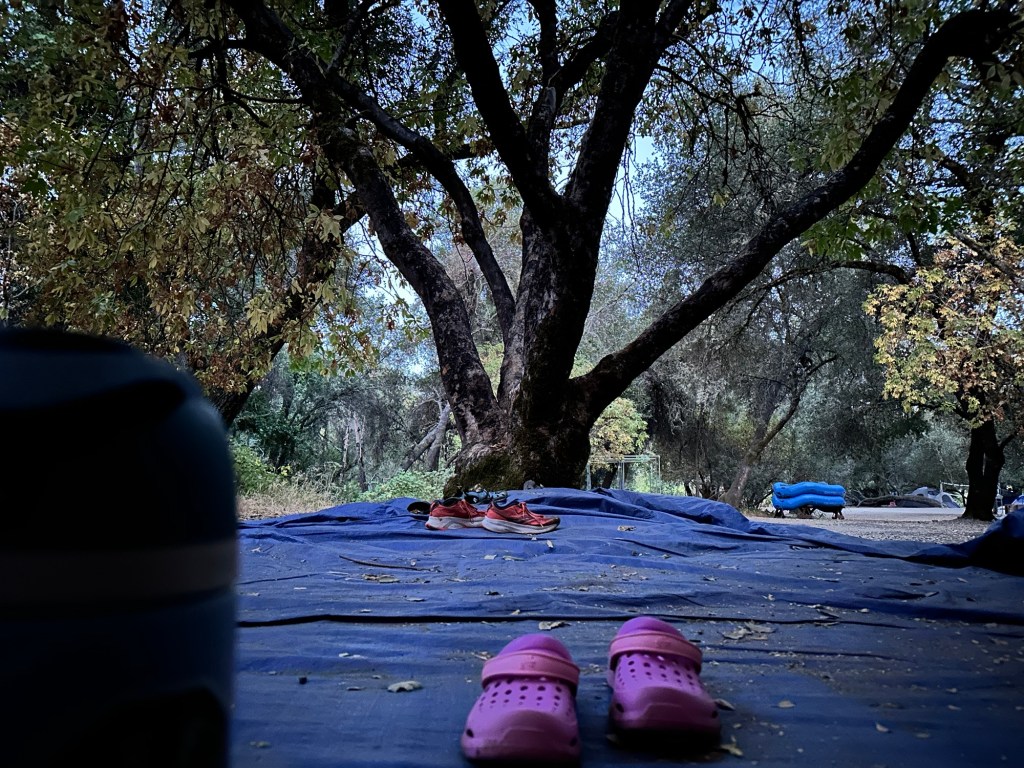
The view from my mat at camp.

For so much of my life I have given my fears far too much ground. Like Peter, I have stayed in the safety of the boat in disobedience, but that’s only caused me additional pain and confusion. What the wild waters of the American river taught me was that I am the most secure when I am trusting Jesus, doing what He says–whether that be to paddle right, left, forward, high side, or get down. I am most secure in Him, even if the wind and the waves don’t go away.

Whether it’s stage IV or a class IV, and even if my worst fears are realized, I know that I know that Jesus is in the boat with me, reading the water, looking out for strainers (that’s a fun bit of river-speak for “obstructions”), and working His tail off behind me–because the Savior who draws near truly loves me. He has saved me from death, and from a life of fear.

I can trust Him.

So can you.

Because he bends down to listen,
    I will pray as long as I have breath!
Death wrapped its ropes around me;
    the terrors of the grave overtook me.
    I saw only trouble and sorrow.
Then I called on the name of the Lord:
    “Please, Lord, save me!”4
How kind the Lord is! How good he is!
    So merciful, this God of ours!

-Psalm 116:2-5

  1. Matthew 24:6, “You will hear of wars and rumors of wars, but see to it that you are not alarmed. Such things must happen, but the end is still to come.” ↩︎
  2. Isaiah 66:12 ↩︎
  3. Emphasis mine ↩︎
  4. Emphasis mine ↩︎
Here I Raise my Ebenezer: Reflecting on My Years as a Teacher

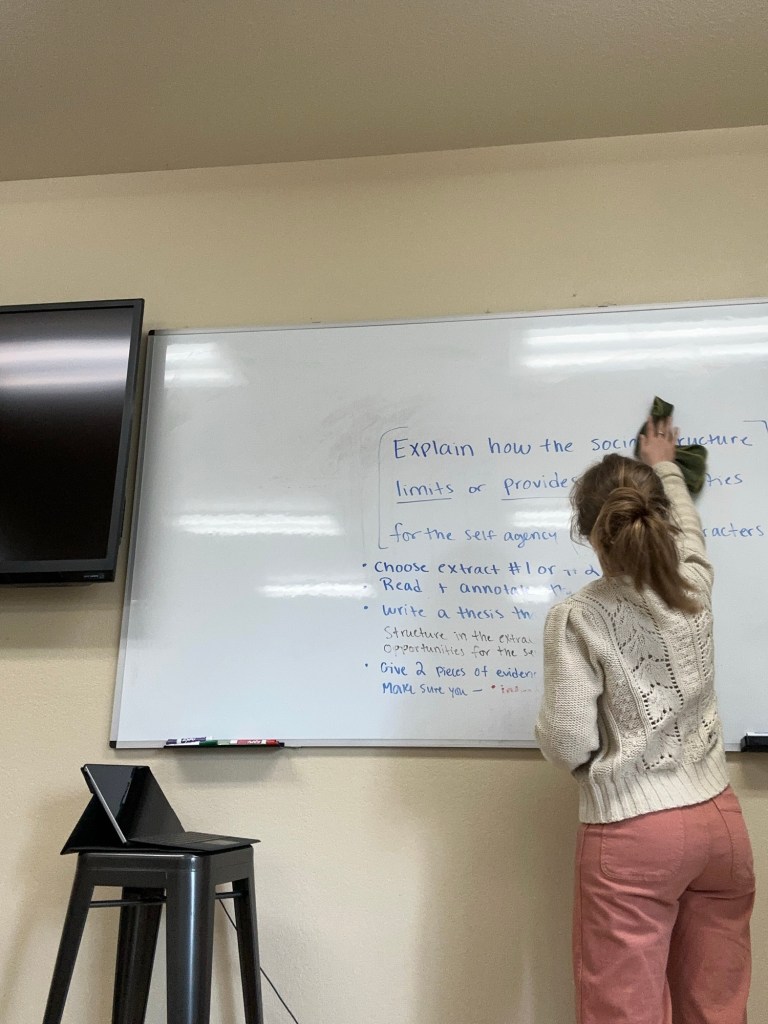
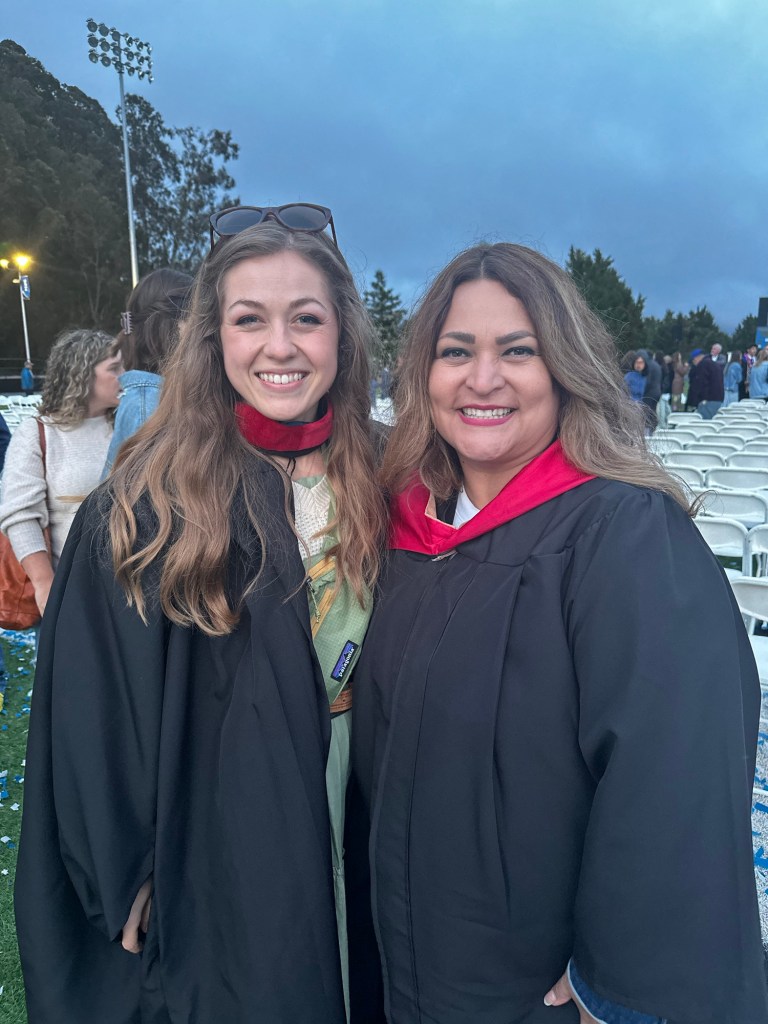
Sunlight pours through the window, golden and dusty as I wipe down the board with a stained yellow rag. It’s late afternoon and the cleaning cart is rumbling gently down the hallway. I hope they will be slow and give me my last few moments in this space. The essays are turned in, final remarks scrawled in the rubric margins, and well-wishes scribbled in yearbooks. I slide a rolling chair back into place and wipe some remaining eraser crumbs from a desk in the back, smiling because I know who sat here last. 

Where did the time go?

I’m transported back to my first day. At this point, teaching is not new to me, but teaching at my alma mater adds a certain feeling of responsibility. Twenty four freshmen are staring at me, and I’m staring back at them. I fiddle with the notes on my podium, trying to hide that my hands are shaking. 

Who let me do this? Where is the adult? Oh! Right. It’s me!

In my last teaching role, I worked harder than I ever have, and I also saw my own tendencies to idolize work on full display. God was merciful in allowing me to see where I had become self-reliant, and He did that partly through Christian community. ❤️

He also gave me colleagues who would become some of the best friends I have ever made.

He gave me a place to be mentored by people who really care about me.

I’ve been feeling like I’m leaving something special behind, and while that may be true, I’m grateful for the numerous gifts of grace Jesus has given me in the classroom. These are gifts and lessons that will last longer than any google form course evaluation.

These are the eternal gifts I get to keep.

So…what now?

Well, God has certainly been up to something, as He always is. I shouldn’t be shocked when confronted with the fact that the Lord sees the desires of my heart, but I still am. And I’m grateful! The way things have worked out, the timing of it all, it still astounds me. I have a new role I’m excited about! God is so good!

These days you can find me working at my local church, serving with friends in both the High School and Worship ministries. It’s all very new, and some days I feel like I am bad at EVERYTHING, but I’ve been encouraged by the promise God gives in Isaiah 43:19 that He is able to do “a new thing.” I made a new friend the other day who reminded me that it’s totally okay to be new at something, and that pep talk helped me remove some of the pressure I had been feeling. As I learn to do a new thing, Jesus is doing a new thing in me! He will be my river in the desert, my way in the wilderness.

I Knew You

I was speaking a couple of weeks ago on Galatians chapter 3 to our high school students and landed on a verse I am just now starting to understand:

“So in Christ Jesus you are all children of God through faith…” (Galatians 3:26).

In his message to the Galatian churches, Paul reminds his listeners that externals, accolades, rule-keeping and the like do not make us sons and daughters of God, but rather the work of Jesus on the cross.

When we put our faith in Jesus, we get a new identity of son or daughter.

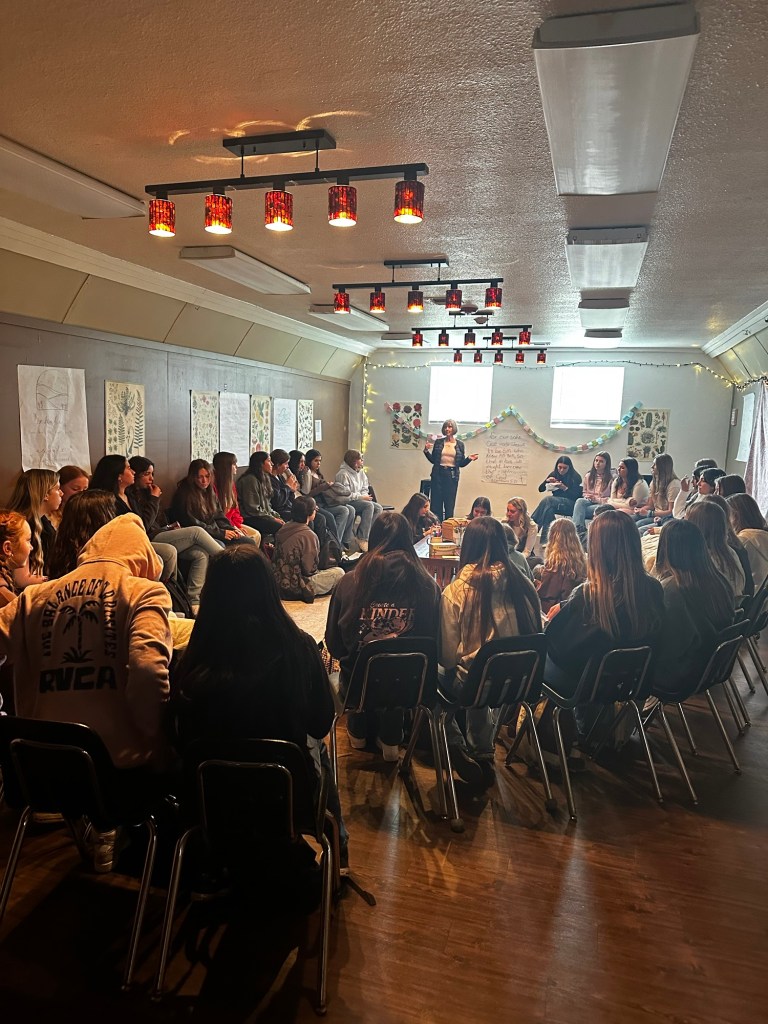
A new thing! Taking high schoolers to camp!

This isn’t the first time God speaks about identity in Scripture. I love how God tells the prophet Jeremiah, “Before I formed you in the womb I knew you” (Jer. 1:5). The next few words outline how the Lord had placed a call on Jeremiah’s life to act as a prophet to the nations, but even before that, Jeremiah was intimately known by the Most High God. 

I admitted to the youth group that I had experienced something of an identity crisis when I decided to leave teaching a few months ago, and that was true. There was an exhilarating sense of freedom and adventure in deciding on a different path, and a great peace in choosing to follow the plans I believe the Lord had been speaking over me for about a year, but there was also the fear of leaving what was known, and the pain of losing the identity of “teacher” that I’ve grown so used to.

Heck, Jesus was a teacher.

But the words of Jeremiah encourage me. My status as one deeply known and loved by God existed before I ever (unwisely) graded 50 papers in a single night. I was His before my name showed up in anybody’s class schedule. And while God may have allowed me to start teaching—just as He is allowing me leave it—my most important role will always be daughter

———————————

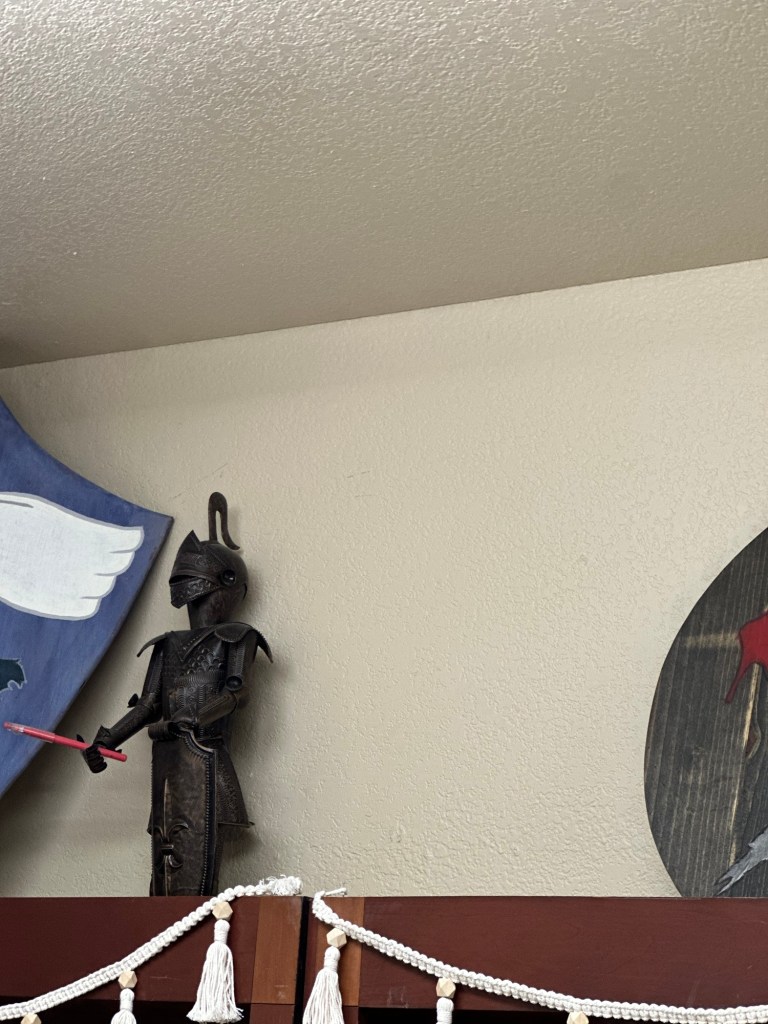
As we clean the last few things from my room, Daryl, my dearest friend and partner teacher, helps me take down my knight statue from the top of the bookshelf.

A year into teaching at this school, a colleague gifted it to me. A small figure, made of metal and about a foot high, he’s supposed to represent the idea that “the pen is mightier than the sword,” but his original pen is long-gone and a hot pink gel-pen has taken its place. He actually used to belong to my old English teacher–the one who made Jesus real to me and helped me see the story of the Bible as the blueprint to all the best love stories ever told.

“He needs to go with you,” she says. “He can stand watch in your little garden.” We hug and cry, and I carry the little knight to the hallway. 

As I close the door, golden light streams into the classroom, into the place where God has met me and taught me of His faithfulness over and over again.

I hold my little knight statue close, a token of the past to remind me that God will still be faithful and good in the future. Here I raise my ebenezer to all God has done in this place, and all He has done for me. ❤️

A Blanket of Snow

When I was small, my Nana sometimes watched me for my mom when she was still working in the makeup world. Life was magic when we were together because Nana held her own special kind of magic. A talented artist, she could draw or paint anything I asked with perfect accuracy (she still can). If I asked for a story, she could weave one together on the spot and go on for hours. Nana liked to put me down for my nap listening to a French language tape so I would one day wake up fluent, or at least able to say, “Je suis fatigue, grand-mère.”

But her favorite thing to do was teach me poems. And she knew hundreds of them by heart. My favorite was one about the changing of the seasons:

“Come, little leaves,” said the wind one day,
“Come o’er the meadows with me and play;
Put on your dresses of red and gold,
For summer is gone and the days grow cold.”

Soon as the leaves heard the wind’s loud call,
Down they came fluttering, one and all;
Over the brown fields they danced and flew,
singing the glad little songs they knew.

“Cricket, goodbye, we’ve been friends so long;
Little brook, sing us your farewell song;
Say you are sorry to see us go;
Ah, you will miss us, right well we know.

“Dear little lambs in your fleecy fold,
Mother will keep you from harm and cold;
fondly we watched you in vale and glade;
Say, will you dream of our loving shade?”

Dancing and whirling, the little leaves went;

Winter had called them, and they were content;
soon, fast asleep in their earthy beds,
The snow laid a coverlid over their heads
.


(“Come Little Leaves” by George Cooper)

A few of the lines are different than I remember them, but the image of leaves being tucked in, just like Nana would swaddle me in her lap, has stuck with me for years. We learned dozens of poems but this one in particular gave me comfort whenever I missed her. I loved the idea of the leaves at rest, contently sleeping in the snow which ultimately signaled the end of their season.

Rest. Contentment. Sleep. I associate these words with the Christmas and New Year’s season, but how seldom I actually obtain them. For teachers, Christmas break is like a far-off lighthouse we seek in the fog and grog of the late Autumn months. Sleepy midnight grading sessions give way to sleepy mornings, and evening (4:45pm where I live) creeps in so early, it’s tempting to go to bed before dinner.

I admit that I have sought Christmas break as my sole opportunity for rest, especially this year. I have been restless in body and soul, so in need of a good hug from Nana and maybe a nap to a French phrases tape.

Rest, I think, is somewhat connected to the concept of contentment. All December, until my last grade is submitted, I find myself talking about how everything will be okay when—fill in the blank with “when break starts” or “when I can sleep in later than 6:00.” My rest, my contentment, becomes dependent on how much work I have to do on the weekend, or how much sleep I’m getting. Pretty unsustainable, right?

But scripture offers a better way.

Take one of Paul’s many stints in a Roman prison where he boasted of his contentment, for example:

 “I rejoiced greatly in the Lord that at last you renewed your concern for me. Indeed, you were concerned, but you had no opportunity to show it. I am not saying this because I am in need, for I have learned to be content whatever the circumstances. I know what it is to be in need, and I know what it is to have plenty. I have learned the secret of being content in any and every situation, whether well fed or hungry, whether living in plenty or in want. I can do all this through him who gives me strength.”

Philippians 4:10-13

I often think of Paul as some sort of superhuman, but in the same way that I have all the same hours in the day as Beyoncé (I saw that on a mug once) we have all the same tools Paul had to work with. Roman prisons weren’t cushy places. They were cold and dark, and your only hope of food or care was for someone in the outside world to remember you. There were plenty of reasons to complain. I’m sure Paul felt them just as we all would. But the deep truth lodged in his heart kept him from wavering from the truth that even in prison, he was still held by the hand of a very present God. This truth did not make the drafty prison any warmer or his situation any less deadly, but the knowledge of a heavenly world beyond the prison walls did keep his heart secure.

So, how do we learn to rest in that same knowledge? For me, repetition is helpful. It’s why a handwritten Psalm 40 is taped beside my bathroom mirror. On days when I feel like I can’t grade one more essay or manage one more headache, my heart and mind need to say with the Psalmist,

 I waited patiently for the Lord;
    he turned to me and heard my cry.
He lifted me out of the slimy pit,
    out of the mud and mire;
he set my feet on a rock
    and gave me a firm place to stand.
He put a new song in my mouth,
    a hymn of praise to our God.
Many will see and fear the Lord
    and put their trust in him.

Psalm 40:1-3

I started attempting to memorize this Psalm last month when waves of anxiety and migraine pain were unwelcome but constant companions. I woke at 3am one night, tangled in my covers and afraid. The Bible app on my phone shone brightly as I searched the concordance for verses. Psalm 40 was on my screen and tears filled my eyes. Suddenly, a song I learned in my college choir came into my head:

I waited for the Lord. He inclined unto me. He heard my complaint. He heard my complaint. (Here’s a link if you want to listen to it.)

Mendelssohn’s emotional hymn which captured my heart 7 years ago once again rang through my heart, burying my anxious thoughts like leaves tucked soundlessly beneath a blanket of snow. God hears me. He has a plan for me. A plan to one day take me home to be with him forever. It’s why he came to earth at great personal cost–really, the greatest cost of all, because he heard humanity’s cry and responded.

Victory in the Christian life cannot be measured by any level of comfort or success simply because by those standards, Jesus lost. Born to poor parents and crucified like a criminal, Jesus was the poster child for contentment in unfavorable and immovable circumstances. Scripture tells us that he persevered, not through a change in circumstances, but by remembering “the joy set before him” (Hebrews 12:2).

Brokenness is a reality of this world. But the God who restores is still present in it. He is not afraid. He is not surprised. A professor whose lecture I recently watched at a conference reminded me that God is not passive to evil in the world, but actively fighting it–the chief piece of evidence being the Cross, which cost him everything.

That God, not our circumstances, is where we find deep rest.
That God, who bends down to listen when we pray (Psalm 116:2) is a safe harbor, our lighthouse in the darkness and the chill.
He is our covering of snow, and we can rest in Him in every season.